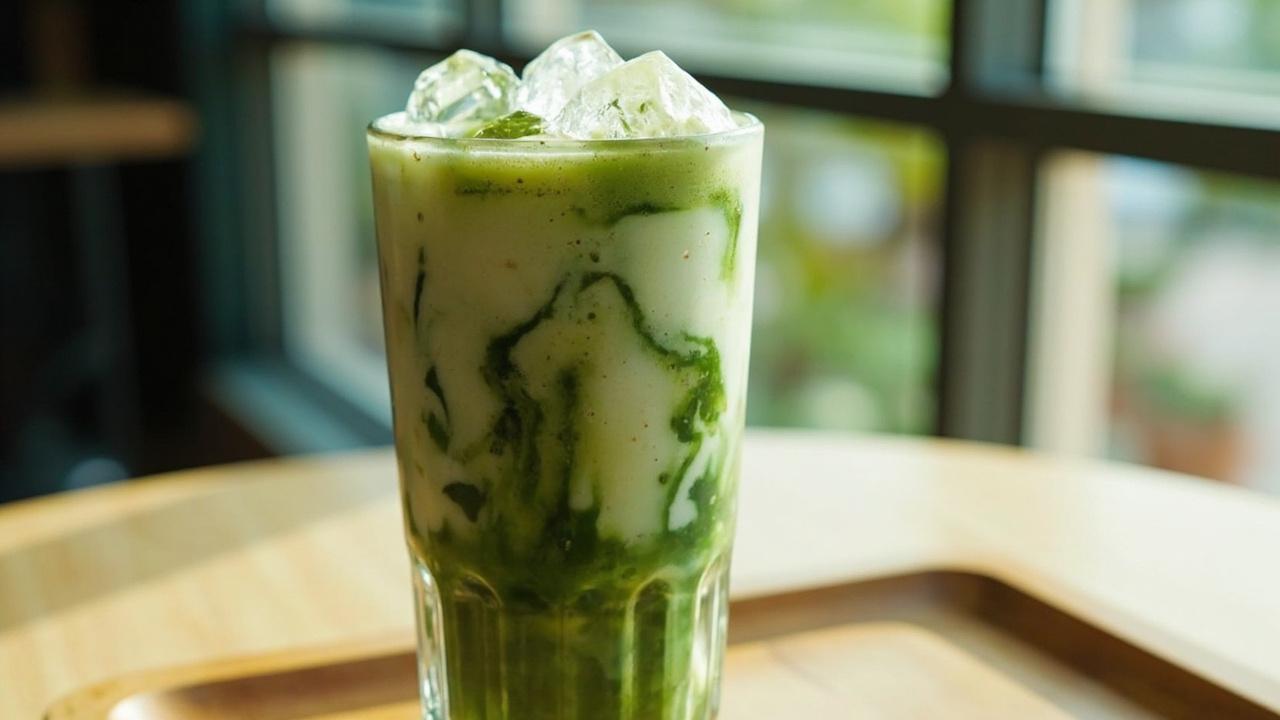
The whisk motion decides whether the cup feels like a smoothie or a café pour — foam that lasts three seconds, or foam that still holds when the milk settles.
A ceremonial-grade matcha and an 80 °C water temperature are the two non-negotiables; the rest of the choices (milk temperature, ratio, sweetener) you tune to taste after a first cup.
What You Need
- 2 g (about 1 tsp) ceremonial or culinary matcha, sifted
- 60 ml filtered water at 80 °C
- 180 ml milk of choice (oat for foam, whole dairy for traditional)
- A bamboo chasen, or a handheld milk frother
- A wide dry bowl (chawan) for the matcha suspension, or a jar with a tight lid for the iced version
- A gooseneck kettle with temperature control, so the water actually lands at 80 °C
The Hot Method (about 3 minutes)
1. Sift 2 g of matcha into the dry bowl. Sifting through a fine-mesh sifter breaks the clumps before water hits the powder; clumps left in will not dissolve regardless of how vigorously you whisk. A single tap-and-shake through the sifter is enough — don’t press.
2. Add 60 ml of water at 80 °C. Boiling water (100 °C) scorches matcha and turns the cup astringent; 80 °C keeps L-theanine intact and the chlorophyll green. Two reliable ways to hit 80 °C: a gooseneck kettle with temperature presets, or pour boiling water and wait 90 seconds before adding it to matcha.
3. Whisk in a firm M-motion for 30 seconds. Keep the bristle tips on the bottom of the bowl. The motion traces a tight zig-zag; the surface goes from glossy to a fine, even foam. Stop when the foam has the consistency of soft shaving cream. A bamboo chasen produces the finest micro-foam; a handheld milk frother works as a substitute but the foam is coarser.
4. Steam the milk to 60 °C. A handheld frother or espresso steam wand both work; the milk should be glossy and integrate when poured. Do not boil — at 70 °C, milk proteins break and the foam collapses within seconds.
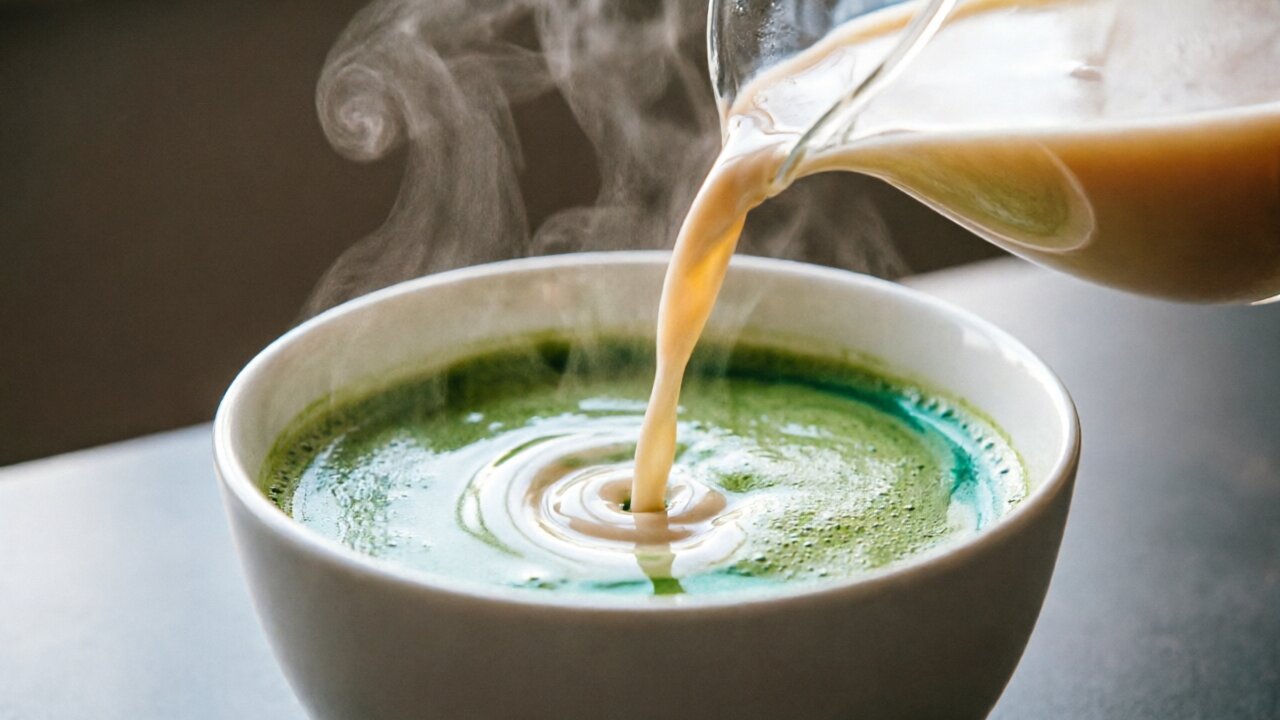
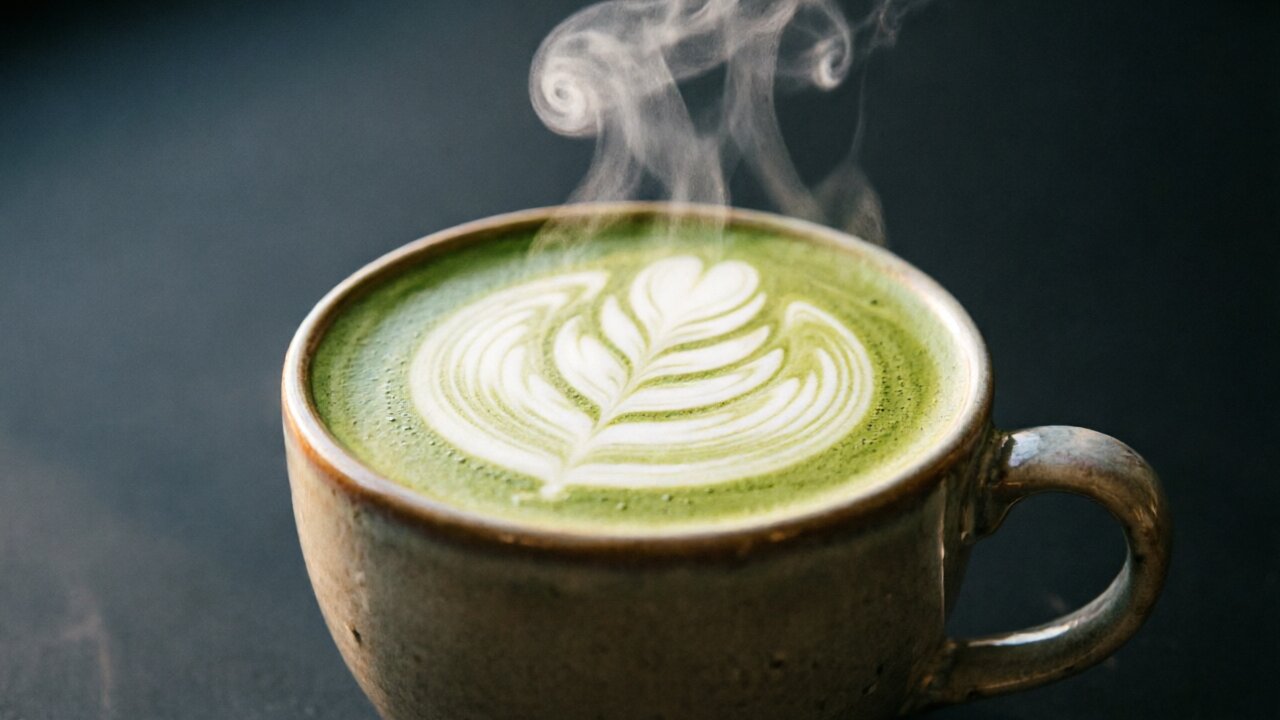
5. Pour from 15 cm height to integrate, then drop to 3 cm and finish with a small circle for a thin latte-art cap. A bowl with a pour spout makes the second pass cleaner; without one, a slow pour from a small height works fine.
What the Temperatures Are Doing
Eighty-degree water is the lower bound for dissolving matcha while preserving the amino acid L-theanine — below 70 °C, water fails to emulsify the powder and the cup tastes chalky. Sixty-degree milk is the corresponding upper bound for foam: at 60 °C, milk proteins are fully unfolded but not yet denatured, so they form a tight micro-foam. By 70 °C, proteins start to break and the foam collapses in seconds. The two boundaries together define the window where the foam holds for at least one minute. Without a temperature-controlled kettle, the most reliable fallback is a kitchen thermometer clipped to the kettle spout — eyeballing “just boiled, slightly cooled” varies too much by kettle and ambient temperature.
Ratio Troubleshooting
Cup is watery and the matcha sits on top. Whisk for longer (45–60 s) and add the water hotter (85 °C) — the suspension is underworked. Alternatively, increase matcha to 2.5 g.
Cup is thick and bitter. Water was too hot (above 90 °C scorches) or ratio skewed too powder-heavy. Drop to 1.5 g and confirm water temperature with a thermometer.
Foam collapses within 10 seconds. Milk was too hot (over 65 °C), or milk was old and the proteins already partly degraded. Try fresh milk at 60 °C, frothed for 15–20 seconds rather than 30.
Clumps sit at the bottom despite whisking. The sift was skipped, or the matcha is old and has clumped in the tin. Re-sift and use a fresh batch.
Latte looks grey instead of green. Too much milk, or the matcha grade is too low. Ceremonial-grade holds its green color in milk; culinary-grade will turn olive-grey at the same ratio.
The Iced Method (about 30 seconds)
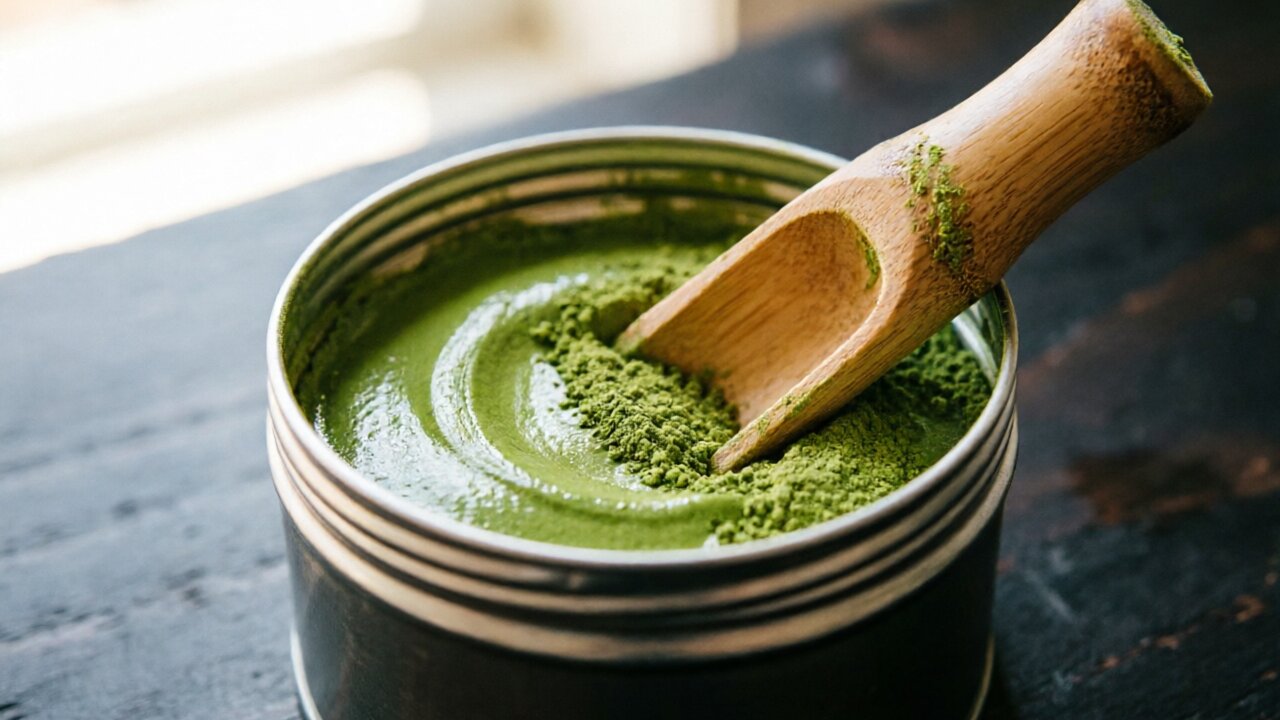
1. Sift 2 g matcha into a cocktail shaker or jar with a tight lid.
2. Add 30 ml of room-temperature water — half the hot version — and shake vigorously for 25–30 seconds. The motion breaks every clump and aerates into a stable cold foam. A shaker with a built-in strainer lid is the easiest container; otherwise a mason jar works.
3. Fill a tall glass with ice and 200 ml of cold milk.
4. Pour the matcha shot over the milk. The two-tone layered look is normal; stir at the table, or stir for the drinker before serving. The cold foam lasts longer than the hot version because there’s no thermal degradation of the air bubbles.
Common Mistakes
- Boiling water directly on matcha. Brings bitterness and dulls the green. Cool boiling water for 90 seconds, or use a temperature-controlled kettle set to 80 °C.
- Cold milk poured over hot matcha suspension. Works in a pinch but creates a thin body; bring milk to 60 °C for café texture.
- Skipping the sift. Guarantees clumps regardless of whisk quality. A handheld frother does not save a bowl that was not sifted.
- Stirring with a fork. Leaves visible flecks and uneven color. If no whisk is available, shake in a sealed jar instead.
- Skipping the thermometer or temperature control. Eyeballing 80 °C is unreliable, and water that runs at 90 °C+ reliably produces a bitter cup that no amount of milk will fix.
Variations That Work at Home
Iced shaken, stronger. Double the matcha to 4 g, use 50 ml water, shake 45 seconds. The cold foam rises higher and lasts longer.
With sweetener. A 1:1 honey-and-hot-water syrup dissolves evenly; cold honey does not dissolve well in cold milk. Maple syrup at room temperature works in either temperature. Agave dissolves cleanly in both.
Coconut, mixed. Full-fat canned coconut milk on its own is too heavy and overpowers the matcha; split 50/50 with oat milk for body without a strong coconut note.
With espresso. A 30 ml espresso shot added before the milk turns the cup into a matcha fusion latte — high-caffeine, more bitter, but a useful pre-workout option.
What You Need to Buy
A recipe like this is the sum of six small purchases, not one big one. We’ve learned this the hard way over the past two years of testing setups in our kitchen. Below is what each piece does, and the cheapest option that still works at the level this recipe asks for.
The matcha. A pre-sweetened latte mix dissolves cleanly even with a basic frother and forgives the slight bitterness of tap water that hard-boiled matcha can’t hide. The Jade Leaf Matcha Latte Mix, Original, $10.99 on Amazon is the same pre-sweetened powder, and it sifts through the screen without resistance.
The water temperature. A kettle without temperature control is the most common reason home matcha tastes harsh. The Cosori Gooseneck Electric Kettle with Temperature Control, $69.99 on Amazon has presets at 80 °C and a gooseneck spout that’s also useful for pour-over coffee. If you already have a variable-temp kettle, this isn’t needed.
The whisk. The chasen produces the finest micro-foam, but it costs $20+ and the bristles wear out. As a lower-fuss alternative, the Zulay Kitchen Milk Frother Handheld, $8.99 on Amazon is a battery-powered wand that does the same job in 15 seconds. The foam is coarser but the cup is the same.
The bowl. A wide-mouthed matcha bowl with a pour spout, $14.99 on Amazon, is what the M-whisk is designed for. A narrow mug works but the whisk’s M-pattern hits the wall too early, leaving unmixed powder on the bottom.
The sifter. A small stainless steel sifter, $9.99 on Amazon, eliminates clumps before water hits the powder. Optional if your matcha is fresh, mandatory if it’s been sitting for two months.
The complete set. If you’d rather buy everything in one box, the Hario Matcha Tea Set (Clear) – Double-Walled Glass Matcha Bowl with Chasen Whisk, $99 on Amazon ships the four matcha-specific tools: bowl, chasen, sifter, and scoop. It does not include a kettle or a milk frother, and the bowl is smaller than the Jade Leaf standalone.
If you already have ceremonial matcha and a chasen, you don’t need anything else. The recipe above is portable across all six options.
Where this fits in Mind of Tea
This recipe lives at the intersection of brewing (the 80 °C and 60 °C choices), teaware (the bowl shape and chasen bristle count), and wellness (the morning caffeine timing). For the Brewing index, Teaware, and Wellness collections, those lenses are explored separately.
The Tea in This Recipe
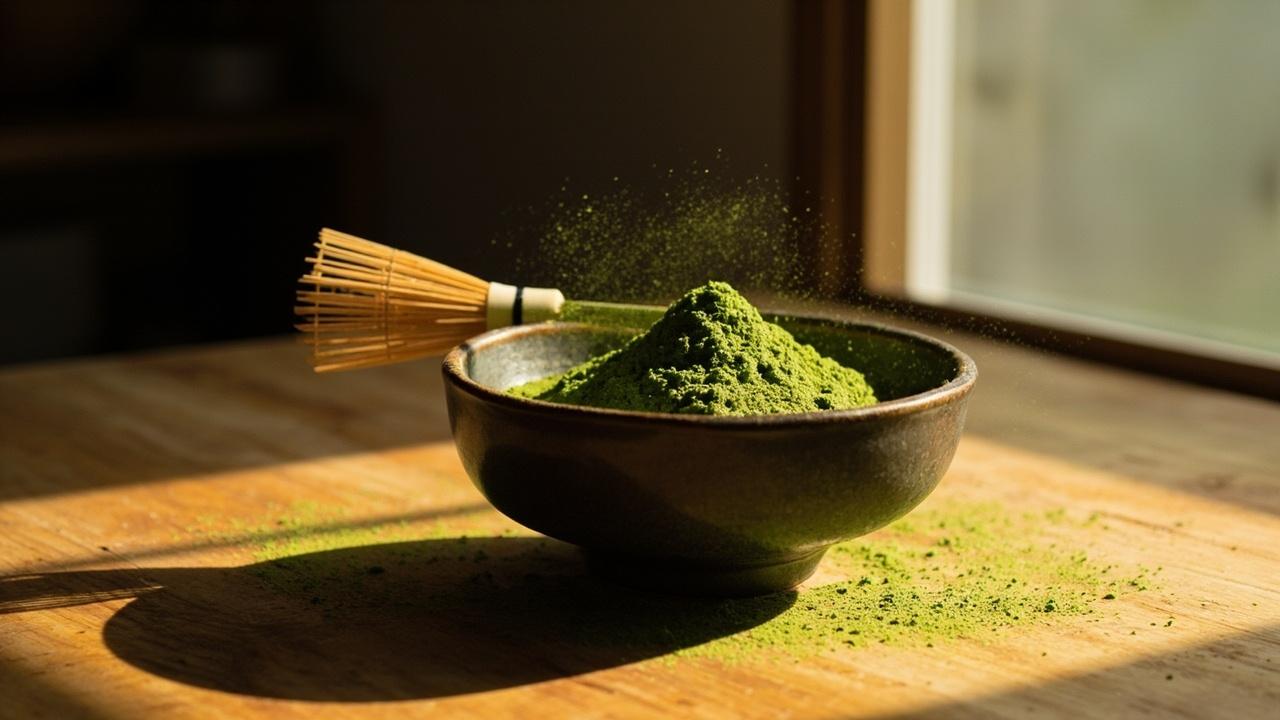
The Mind of the Latte Cup
A good matcha latte is more felt than tasted — that quiet density on the tongue, the foam that holds for a full minute before sinking, and the second-cup steadiness from L-theanine absorbing mid-brew. The body recalibrates after the first cup, so the second cup is calmer than the first.
Make it slow once before making it fast.
References
[1] USDA FoodData Central. (2024). Matcha grade compositional data, including amino acid, catechin, and chlorophyll ranges by grade. The lower bitterness of ceremonial-grade matcha reflects higher L-theanine-to-catechin ratios, which dairy fat in latte applications further smooths.
[2] Huppertz, T., et al. (2010). “Foaming properties of milk proteins.” In: Milk Proteins: From Expression to Food. Academic Press. Documents why oat milk produces the most stable micro-foam among plant milks (beta-glucan + protein matrix), whole dairy produces rich foam through whey-protein denaturation at 60 °C, and almond milk foam is thinnest due to low protein content.