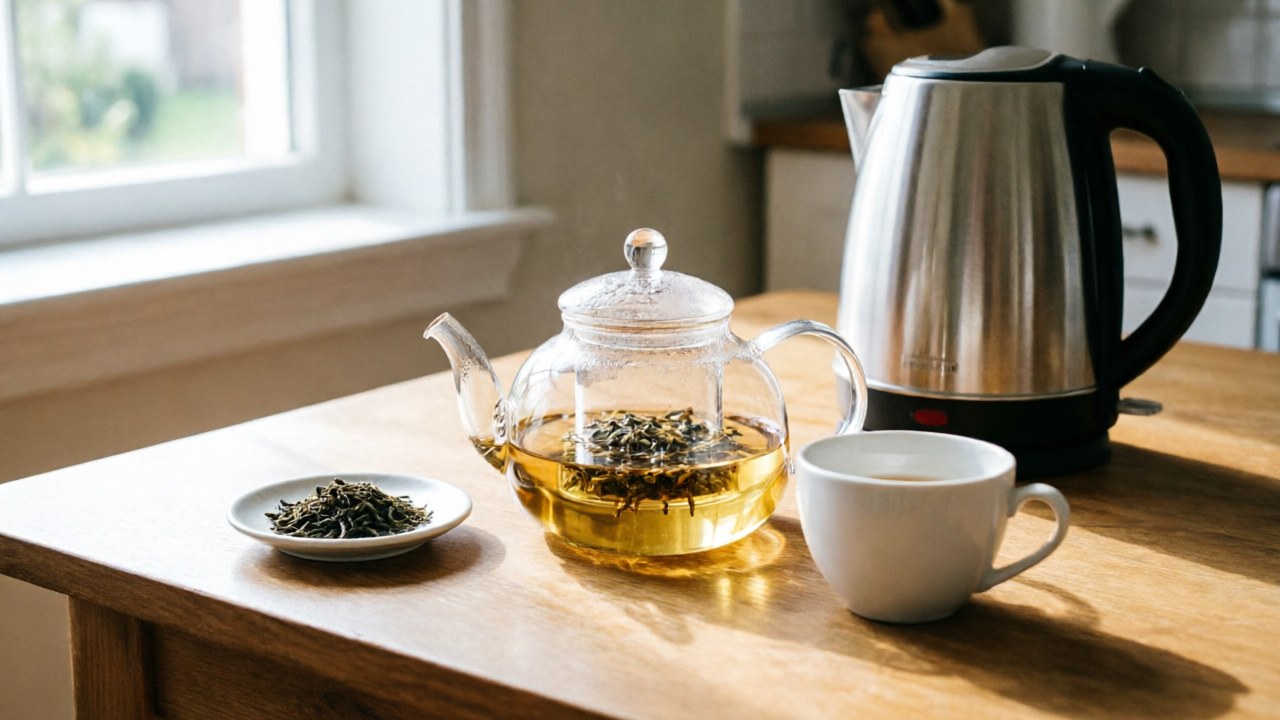
Most “how to brew tea” guides hand you a temperature chart. This one starts with a vessel decision — mug basket, glass pot, or simple gaiwan — then a leaf-to-water ratio skill, a Western first method, and an optional short gongfu-home multi-infusion. I keep one practice leaf for a week before I open a second tin; that habit beats ten half-tried boxes.
Why a First-Cup System (Not Another Temp Chart)
Search results already own the generic advice: green cooler than black, about a teaspoon per mug, steep a few minutes [2][6]. That chart is useful once, then it stops answering the real beginner questions.
What should hold the leaf? How do you adjust when the cup is thin or harsh? Which leaf should you stick with for a week so the variables stop moving all at once?
This page is the First cup lane of the brewing hub — a small decision system, not a second encyclopedia of temperatures. Vessel → four variables → Western steps → optional short multi-infusion at home → named mistakes → one practice leaf. Full charts live in the steeping time and temperature guide and the tea leaf to water ratio calculator when you want numbers without re-reading a wall of text.
What You Need
You don’t need a tray, a fairness pitcher, or a ceremony set for day one. You need heat, a vessel that lets leaves open, a way to stop the steep, and one leaf you will actually finish.
Heat
- A kettle that can hold green-friendly water without guesswork. A Chefman temperature-control kettle with presets covers green, black, and herbal without a separate thermometer.
Vessel (pick one path first)
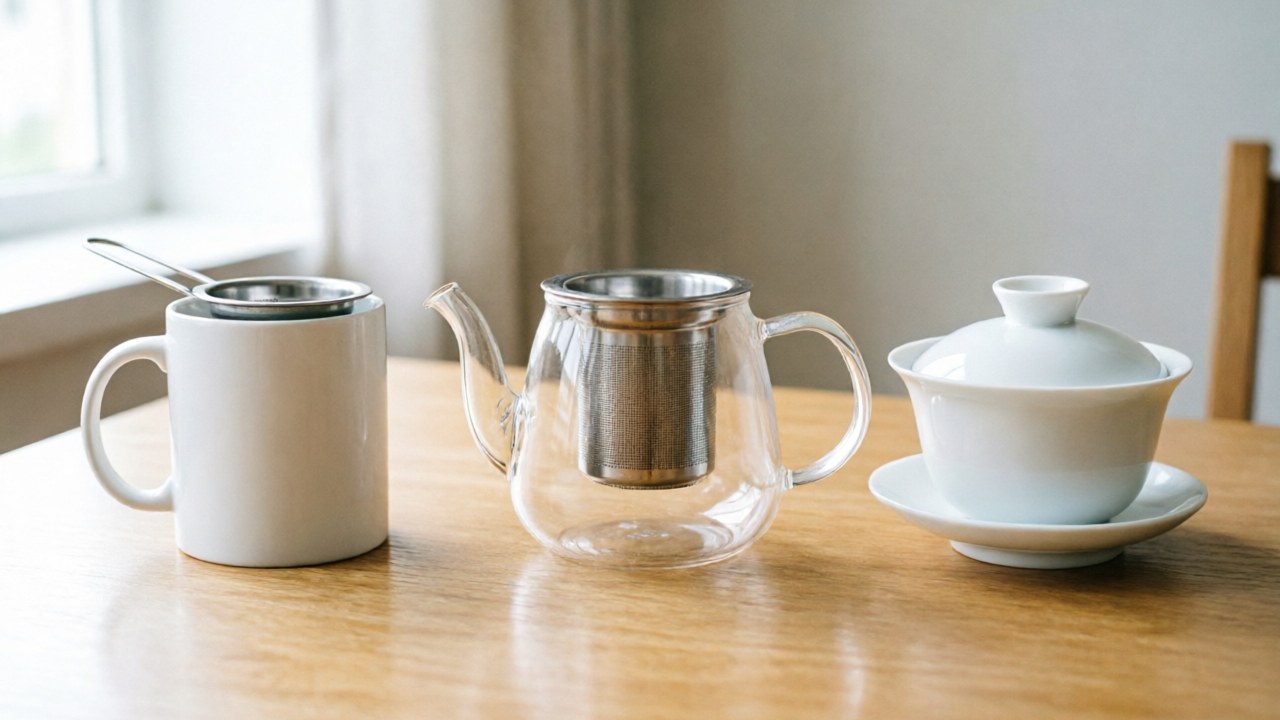
- Mug only: a large basket infuser beats a cramped tea ball. The Yoassi stainless basket infuser leaves room for whole leaf to open in a normal mug.
- Share two cups / watch the leaf: a HIWARE 1000 ml glass teapot with removable infuser shows color and unfurl — a quiet quality lesson.
- Optional step-up later: a simple porcelain gaiwan for short multi-infusion home practice, not a full ceremony kit.
Time
- A magnetic kitchen timer on the fridge beats “phone in the other room” steeps that run long and turn harsh.
Leaf
- One practice path only — green sampler or forgiving black tin — covered in the Practice Leaf section below. Gear without a leaf is still an empty kitchen.
For a deeper vessel path after this first cup, see the teaware path for beginners and the Teaware hub.
The Four Variables (Leaf, Water, Heat, Time)
Every cup is four knobs. Change one at a time so you can taste what moved [7].
Leaf. Whole leaf and larger cuts usually give cleaner cups than dust in a bag. Dense black and fluffy green do not measure the same by volume — I treat ratio as a skill, not a single teaspoon law.
Water. Fresh cold water in the kettle. Reboiled water tastes flat; the cup dulls even when leaf and heat are fine [6].
Heat. Green prefers cooler water so the cup stays sweet; black handles near-boil and builds body there [4][6]. You do not need a full matrix on day one — use the steeping time and temperature guide when you branch into oolong or white. A temperature-control kettle removes the “is this cool enough?” guess.
Time. Steeping is the infusion process itself [2]. Bitterness is usually time or heat, not “bad tea.” Set a timer, remove the leaves, then taste. Leaving an infuser in the mug turns a good cup into a long, harsh one.
ISO sensory standards use fixed lab ratios for cupping, not for your kitchen mug — treat them as industry context, not a home rule [5]. Your job is a cup you will drink again tomorrow.
Choose a Vessel for Your First Cup
AIO results rarely force a vessel decision. They list tools; they don’t rank the trade-offs for a small sink and one person.
Mug + basket infuser
Wins when you want one cup, minimal wash, and travel-light gear. Fail mode: a tiny ball infuser packed full so leaves never open. Fix: a roomy basket infuser that sits high enough to lift out cleanly.
Glass pot with roomy basket
Wins when you share two cups or want visual feedback. Watching leaves open is a free lesson in quality — tight pellets that stay closed often need more room or a longer first rinse of heat. The glass teapot with removable infuser keeps that lesson on the table.
Simple gaiwan (optional step-up)
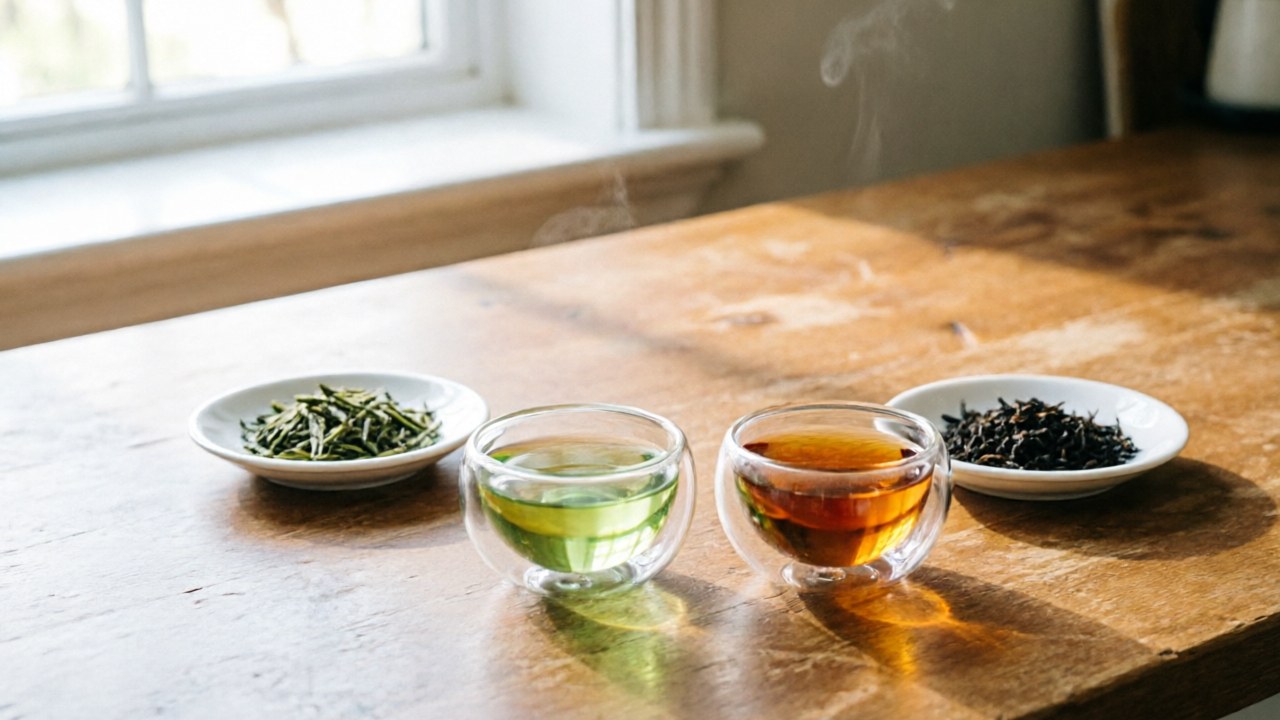
Wins when Western mugs feel solved and you want short multi-infusion home practice — higher leaf, small water, many short pours — without ceremony theater [3]. Pair a porcelain gaiwan with small double-wall tasting cups so liquor color is easy to compare across infusions. For tasting-oriented gear paths, see teaware for tasting.
Western Brew — Step by Step
Kitchen-table method. No tray. No 21-step sequence.
1. Heat water to a type-sensible range. Green roughly 75–85 °C; black near boil. A temperature-control kettle holds the preset; without one, boil and wait a short cool-down for green.
2. Warm the vessel (optional). A quick rinse with hot water steadies the steep temperature so the first pour doesn’t crash into a cold mug.
3. Add leaf by ratio skill. A solid start is about 2 g per 240 ml (roughly 8 oz) — about 1 tsp for denser black, a heaping tsp for fluffier green. Use the brewing-ratio calculator when you scale a pot.
4. Steep on a timer, then remove the leaves. Set a kitchen timer. Green often sits shorter; black often sits longer — windows live in the steeping-time tool. Lift the basket or pour off; don’t leave leaf soaking while you answer email.
5. Taste and note liquor color. Small clear glass tasting cups make color and second-sip changes easier to see than an opaque mug.
Vessel for this run: mug + basket infuser or the glass pot. Same five steps either way.
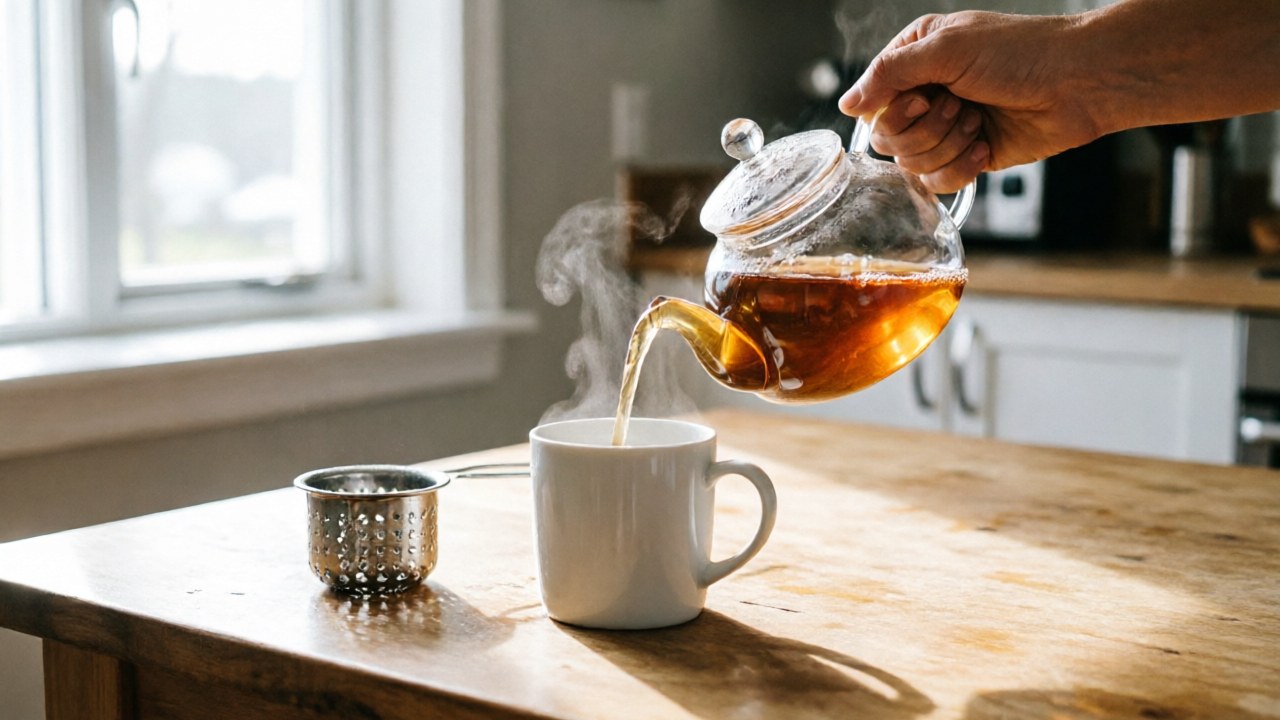
Leaf-to-Water Ratio as a Skill
One number is a starting line, not a law [7]. Dense CTC-style black packs more mass per teaspoon than open green. Rolled oolong needs room and often a higher leaf load in a small vessel.
Adjust in this order when the cup is off:
- Weak / thin → more leaf next time, or less water for the same leaf.
- Harsh / bitter → shorten time first, then lower heat (especially green), then reduce leaf.
- Flat → fresh water and a clean vessel before you blame the tin.
Western vs Short Gongfu-Home (No Ceremony)
Two home rhythms. Neither requires a formal tea room [3].
| Western | Short gongfu-home | |
|---|---|---|
| Leaf load | Lower | Higher |
| Water | Full mug or pot | Small vessel (gaiwan / small pot) |
| Steep | A few minutes, once (plus optional re-steep) | Many short pours (about 10–40 s) |
| Goal | One solid cup | Flavor layers across infusions |
| First vessel | Mug basket or glass pot | Gaiwan + small cups |
Boundary: this is optional multi-infusion at home, not a full gongfu sequence or Chado. When you want a technique path after the first cup, the live Special cups example is the matcha latte technique. Ceremony practice sits on a different rail — tea practice for beginners — and is not the job of this page.
Common First-Cup Mistakes
- Boiling green tea. Scorched edge, bitter finish [4]. Cooler preset on a temperature-control kettle, or boil-and-wait.
- Overcrowded ball infuser. Leaves never open; the cup tastes thin and grassy at once. Switch to a large basket.
- Reboiled or flat water. Dull cup even with good leaf [6]. Fresh cold fill each boil.
- Leaving leaves in the mug. Over-steep by accident. Timer + remove the infuser.
- Variety rabbit-hole before one practice leaf. Ten open tins, zero skill. I pick green or black below and stay for 1–2 weeks before branching.
Windows and type notes: steeping time and temperature guide.
Practice Leaf Path — Green or Black First
Pick one path. Master the four variables on that leaf before oolong or puerh rabbit-holes.
Path A — Green (sensitive heat teacher)
A four-flavor Chinese green sampler (Longjing, Biluochun, Guapian, Maofeng styles) teaches cooler water and shorter steeps without buying bulk of the wrong green. For a single variety deep-dive, start with Longjing green tea. Lesson: heat mistakes show up fast and clearly.
Path B — Black (forgiving boiling-water first cups)
A reliable English Breakfast loose-leaf tin forgives near-boil water and builds body when the ratio is right. For a related black profile (not the same SKU), see Keemun black tea. Lesson: fuller body, higher heat tolerance, easy Western mug habit.
Tools Recommended (By Role)
Roles you already met above — re-stated once so the kitchen list is clear. No new ASINs.
- Heat: Chefman temperature-control kettle
- Western vessel: HIWARE glass teapot
- Mug path: Yoassi basket infuser
- Time: Antonki kitchen timer
- Green practice: iTeaworld green sampler
- Black practice: Harney English Breakfast tin
Gaiwan and tasting cups stay optional until Western cups feel steady.
Where to Go Next
- Parameters today: steeping time tool · brewing-ratio calculator
- Special cups technique (live): matcha latte recipe
- Teaware paths: beginners · personal system
- Ceremony (different job): tea for beginners
- Hub lane: First cup on the brewing hub
The Mind of the First Cup
A first cup is a small system, not a perfect chart. Choose a vessel you will actually use, measure leaf against water as a skill, and stop the steep on purpose. One practice leaf — green or black — teaches more than ten half-tried tins. Keep the water honest, keep the leaves free to open, and let the next cup adjust the last.
References
[1] Wikipedia contributors. “Tea.” Wikipedia. https://en.wikipedia.org/wiki/Tea
[2] Wikipedia contributors. “Steeping.” Wikipedia. https://en.wikipedia.org/wiki/Steeping
[3] Wikipedia contributors. “Gongfu tea.” Wikipedia. https://en.wikipedia.org/wiki/Gongfu_tea
[4] Wikipedia contributors. “Green tea.” Wikipedia. https://en.wikipedia.org/wiki/Green_tea
[5] International Organization for Standardization. ISO 3103 — Tea — Preparation of liquor for use in sensory tests. https://www.iso.org/standard/7328.html
[6] UK Tea & Infusions Association. Everyday brew guidance (fresh water, timed steep). https://www.tea.co.uk/
[7] Specialty Tea Institute / World Tea Academy educational materials on brewing fundamentals (leaf-to-water as adjustable skill; type-sensitive temperature). https://www.worldteaacademy.com/