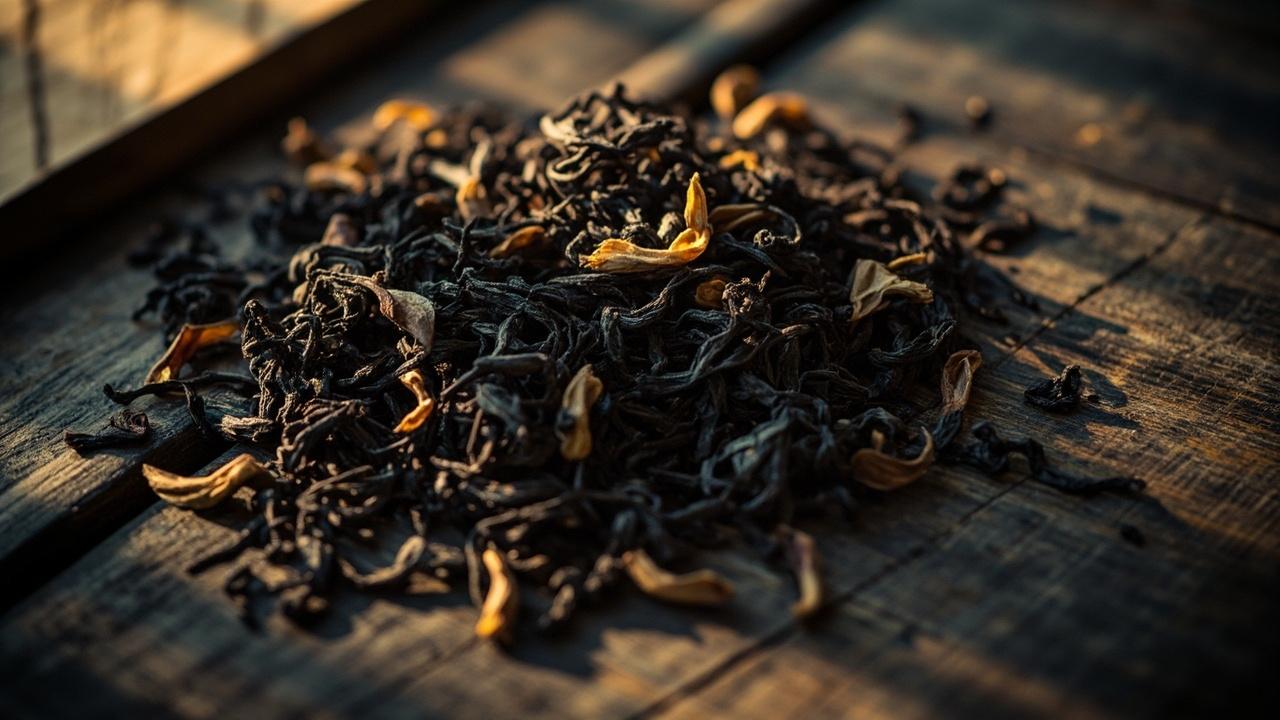
From Anhui’s Qimen County, Keemun (祁门红茶, Qimen Hongcha) is China’s signature black tea — built on the Zhuye cultivar and known for orchid–cocoa–wine aroma, not smoke [1]. This hub skips pure encyclopedia definition and teaches the Hao Ya / Mao Feng / Congou grade ladder, gongfu multi-infusion plus Western brew parameters, and how to choose authentic leaf.
Why Keemun Matters
Keemun sits at the fully oxidized end of the tea spectrum: a Chinese hongcha (红茶, black tea), not oolong and not green. The English name “Keemun” is an older romanization of Qimen (祁门); Chinese speakers still say Qimen Hongcha. Commercial black-tea production centered on Qimen County in Anhui in the late nineteenth century, when local leaf — often linked to the Zhuye (槠叶) cultivar — was sorted into export grades that still shape today’s bags [1][6].
Why it earns a permanent place on a home shelf:
- Orchid–cocoa signature — good lots smell floral and chocolatey, not just “breakfast tea.”
- Grade ladder you can taste — Hao Ya, Mao Feng, and Congou are real leaf sorts, not marketing fluff [3].
- English Breakfast backbone — historically, Keemun softened malt-heavy blacks in classic blends.
- Gongfu-friendly black — short multi-infusions work as well as a Western mug when you dial leaf and time.
If you already drink rolled oolong such as Tieguanyin, Keemun is the step into full oxidation with a softer floral-cocoa register. If you know flat Chinese green like Longjing, this is the opposite process: full black, wine-dark liquor, no pan-fire grassiness. Powdered Japanese green like Matcha is another form entirely — whole twisted leaf here, not stone-ground powder. You don’t need a full ceremony kit on day one — leaf, hot water, and a simple vessel are enough. For origin context, see Keemun on Wikipedia.
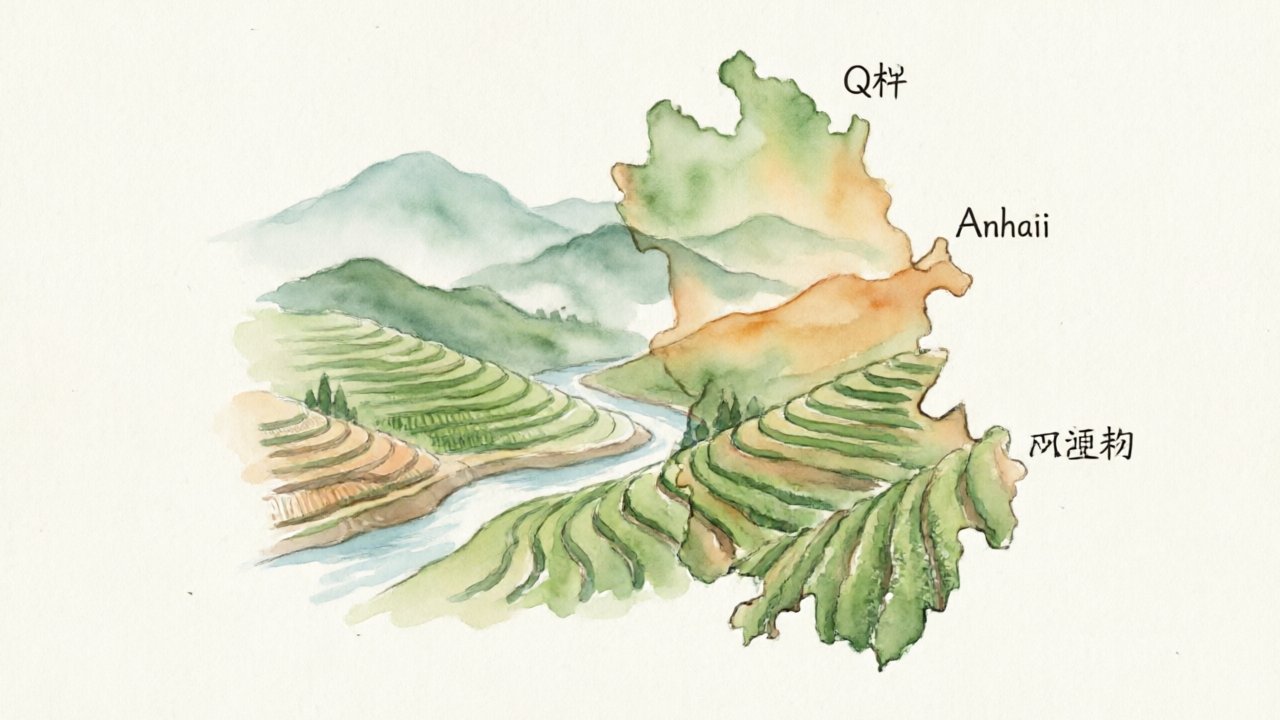
Grades at a Glance (Hao Ya / Mao Feng / Congou)
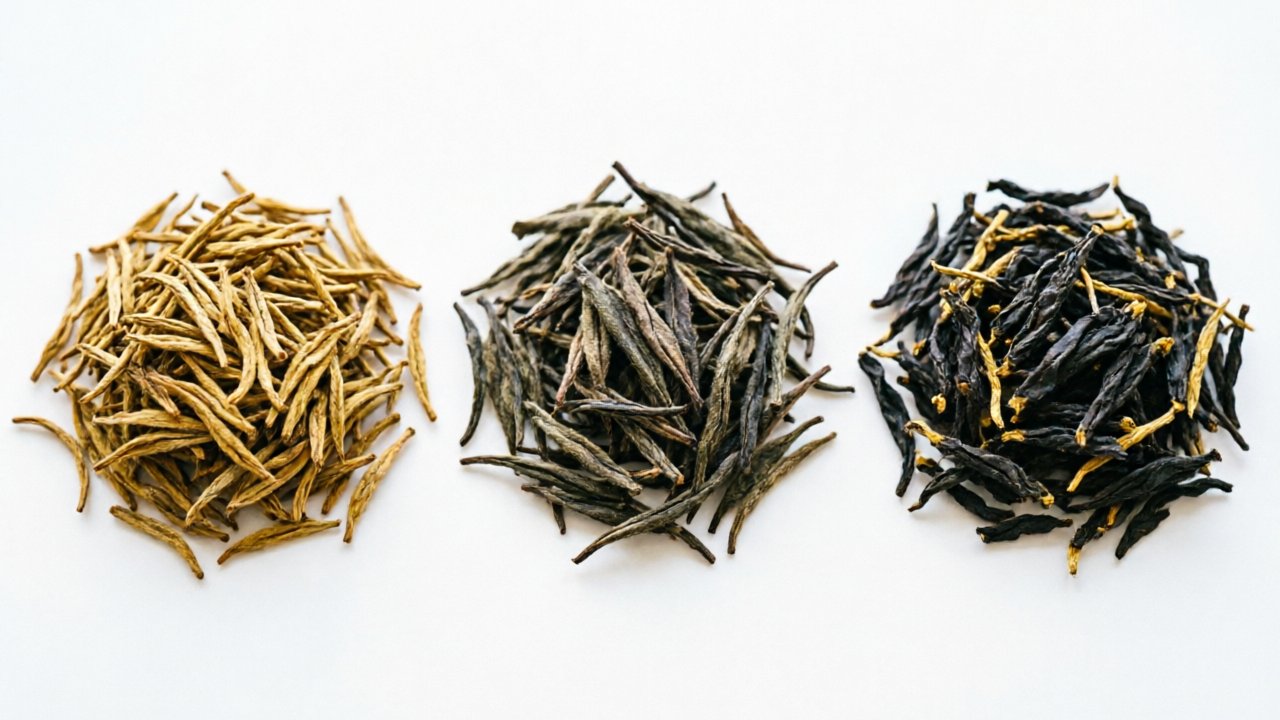
The biggest buying mistake is assuming every “Keemun” bag is the same tea. Hao Ya, Mao Feng, and Congou share the Keemun black-tea family; the split is leaf grade and sorting, not a different plant species [3].
| Grade | Chinese cue | Leaf look | Aroma / body | Best for | Starter pick |
|---|---|---|---|---|---|
| Hao Ya (毫芽) | tippy “downy buds” | fine tips, elegant twist | refined orchid, light cocoa, clean finish | tasting sessions, gifts, gongfu | The Tea Farm Hao Ya |
| Mao Feng (毛峰) | “hairy peak” style leaf | slightly larger, peak-shaped | floral-cocoa balance, medium body | daily premium cup, education tin | Tealyra Keemun Mao Feng |
| Congou (工夫) | classic export “gongfu” grade | tighter twist, fewer tips | fuller breakfast body, wine-dark | morning mug, milk-optional, bulk | Davidson’s Congou |
| Mid “Qimen HongCha” B lots | origin-labeled daily | mixed leaf | solid daily drinker | mid-week mug | ChaWuWarmSun Qimen |
Retail bags often say only “Keemun.” Read for Hao Ya / Mao Feng / Congou / tippy / organic cues before you buy bulk. Authenticity cues on the package: Qimen / 祁门 / Anhui; dry leaf dark with golden tips on Hao Ya; aroma orchid–cocoa, not pine smoke [6].
Smoke myth (callout). Classic Keemun is not Lapsang Souchong. If the bag smells heavily of campfire pine, you’re holding a smoked Fujian style or a blend — not traditional Qimen black tea [3].
How Keemun Is Made
Keemun’s character comes from full black-tea processing, not from a smoke house. Five short steps explain why the cup tastes orchid–cocoa instead of campfire:
Plucking
Spring is the primary harvest window. Fine bud-and-leaf plucks feed Hao Ya sorts; coarser leaf feeds Congou-style export grades.
Withering
Leaves lose moisture so full oxidation can proceed evenly. Under-withered leaf can taste grassy even after “black” processing.
Rolling
Cell rupture and the classic Congou twist build the export leaf shape Western buyers still recognize as “gongfu black.”
Oxidation (fermentation)
Full oxidation places Keemun in the black-tea family — unlike partial oxidation on oolongs such as Tieguanyin [1]. This step builds the wine-dark liquor and cocoa mid-palate.
Drying / firing
Heat locks the orchid–cocoa aromatic profile. Classic Keemun has no pine-smoke step; smoke is a separate Fujian Lapsang tradition [3].
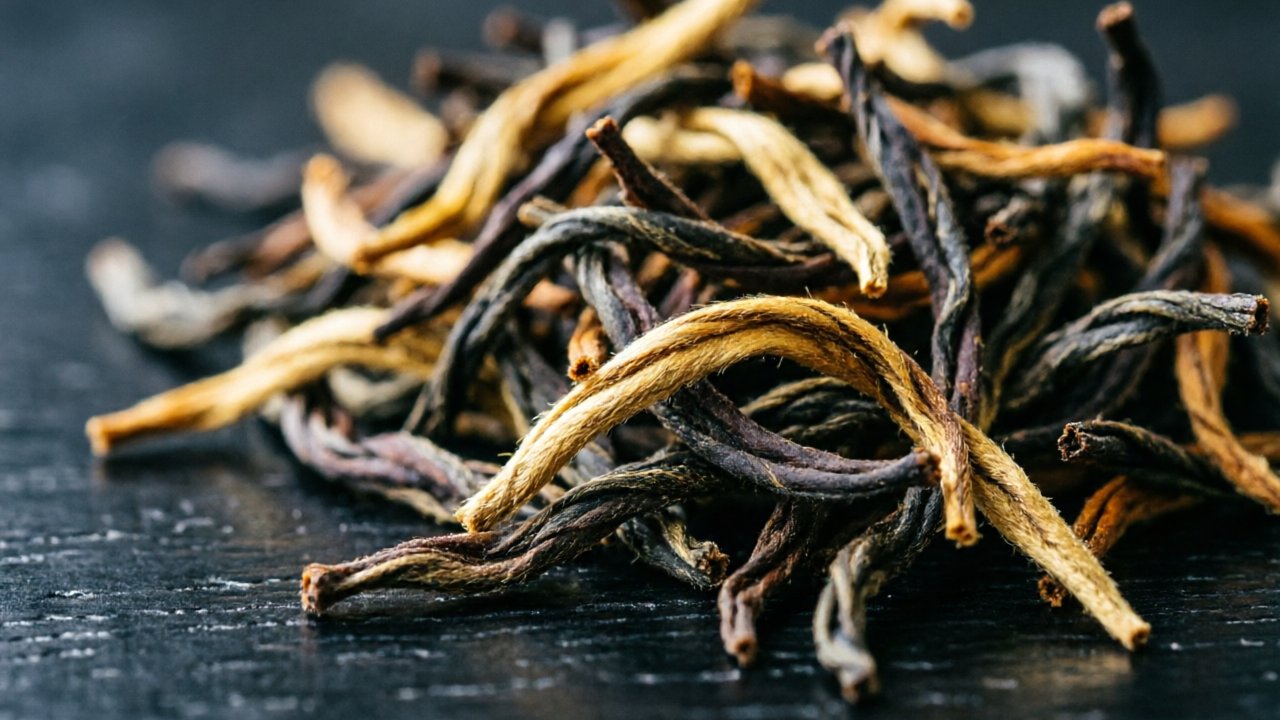
Dry leaf: dark brown–black with gold tips on higher grades. Wet leaf opens to coppery liquor. Dust and fannings belong in bags for convenience, not in a tasting session.
How to Brew Keemun (Gongfu + Western)
Black tea rewards hot water and honest leaf weight — but you don’t have to stew it. If you are new to leaf tea, start with tea for beginners, then use the steeping time tool and brewing ratio tool to dial grams and minutes [4].
Western mug method
| Param | Value |
|---|---|
| Leaf | 2.5–3 g per 250 ml mug |
| Water | 90–95 °C (just off boil; Hao Ya prefers slightly cooler) [5] |
| Time | 3–4 min first steep; +30–45 s re-steep |
| Steeps | 2–3 |
| Milk | optional on Congou breakfast grade; skip on fine Hao Ya tasting |
A five-minute first steep on tippy Hao Ya often tastes stewed and flat. I keep Western steeps in the 3–4 minute band when I want orchid, not astringent stew. You can’t handle every Keemun lot like a teabag.
Gongfu multi-infusion (primary method)
Typical starting point: about 1 g leaf to 15–20 ml water — denser than Western brewing [4].
| Infusion # | Leaf : water | Temp | Time | Notes |
|---|---|---|---|---|
| Rinse (optional) | 5–6 g / 100–120 ml gaiwan | 95 °C | 3–5 s, discard | wakes twisted leaf |
| 1 | same | 95 °C | 15–20 s | orchid top notes |
| 2 | same | 95 °C | 12–18 s | cocoa / wine body often peaks |
| 3–4 | same | 95–98 °C | 20–30 s | deeper malt-cocoa |
| 5–6 | same | 98 °C | 30–45 s+ | sweet finish; stop when thin |
Hotter and longer pulls more bitterness and more caffeine; cooler and shorter keeps florals clearer [5]. Use the table as a home-practice ladder, not a lab protocol [4]. Black tea tolerates hotter water than green, but stewing fine Hao Ya still dulls the cup.
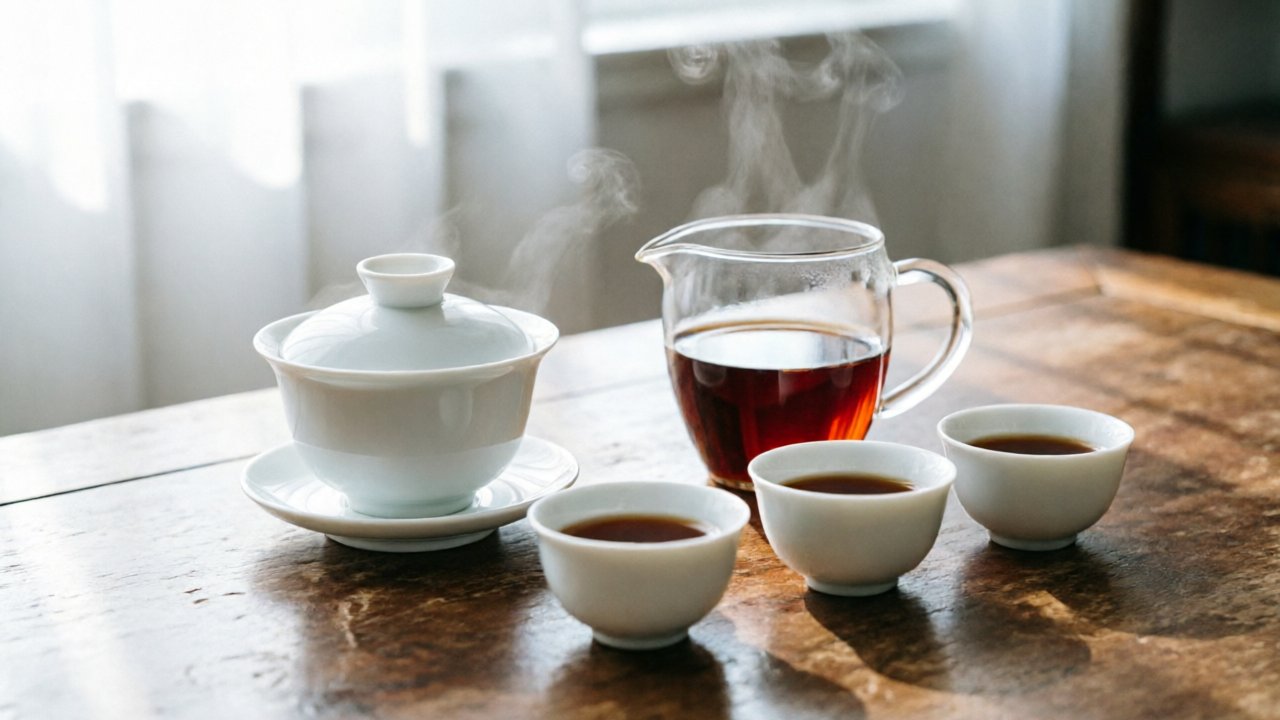
Vessel. Porcelain gaiwan stays neutral for orchid–cocoa evaluation — a Fashion & Lifestyle 150 ml white gaiwan is enough for daily sessions. For multi-guest pours, a REOWONU gongfu set (gaiwan + cups) keeps service clean. It’s worth starting simple: teaware for beginners covers the minimum path. A full gongfu basics guide is planned for the ceremony lane — phrase it as coming soon, not a live link yet.
Flavor Guide (Orchid / Cocoa / Wine)
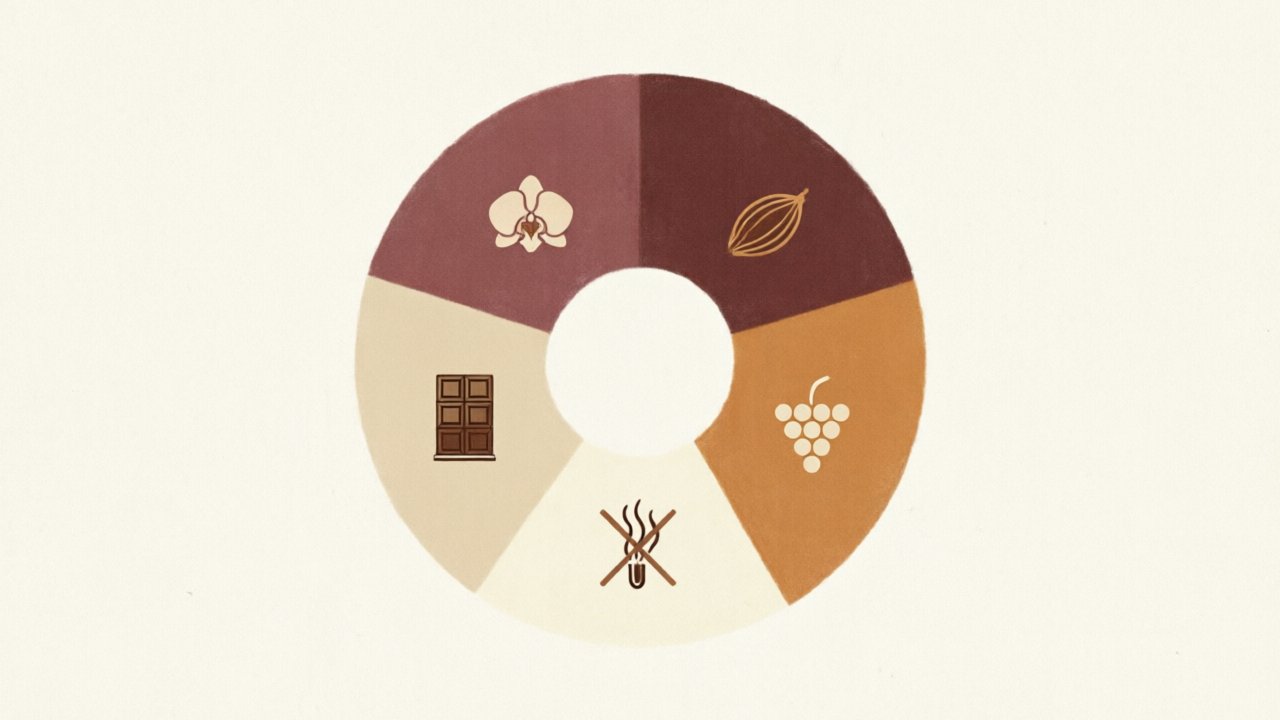
Keemun’s reputation rests on orchid–cocoa–wine aromatics, not smoke or heavy Assam malt [3]. Use these dimensions when you smell dry leaf, liquor, and wet leaf:
- Orchid / floral — hallmark of good Hao Ya and fine Mao Feng
- Cocoa / dark chocolate — mid-palate signature of classic Keemun
- Wine / dried fruit / stone fruit — body and finish on Congou and good mid grades
- Toasted grain / malt — secondary; if dominant, may be Assam-leaning blend
- Pine smoke — not classic Keemun; points to Lapsang or smoked blend
- Clean sweetness after swallow — quality signal (not astringent stew)
Dry leaf should smell floral–cocoa and clean — not dusty, sour, or campfire. Liquor: bright amber to deep burgundy (the old trade nickname “burgundy of teas”) [1]. Wet leaf: coppery and elastic. Dust and fannings are bag-grade only. For neutral cupping vessels and aroma focus, see teaware for tasting. You’ll learn more from one careful session than from label copy alone.
If you want a small tin aimed at floral-cocoa education, Tealyra Keemun Mao Feng 110 g is built around that profile language.
Keemun vs Assam / Darjeeling / Lapsang
Type-vs-type comparison helps you buy the cup you actually want [7]:
| Dimension | Keemun | Assam | Darjeeling | Lapsang Souchong |
|---|---|---|---|---|
| Origin cue | Anhui Qimen, China | Assam, India | Darjeeling, India | Fujian (smoked style) |
| Oxidation | full black | full black | full / sometimes lighter “black” | full + pine smoke |
| Core flavor | orchid, cocoa, wine | malt, bold, brisk | muscatel, floral, bright | pine smoke, campfire |
| Milk | optional (Congou) | common | usually plain | plain or adventurous |
| Gongfu fit | excellent | good (shorter life) | good (delicate) | good if you want smoke |
| Breakfast blend role | classic backbone | common backbone | specialty / afternoon | specialty only |
Smoke myth correction. Classic Keemun is not smoked. Lapsang is the smoked Chinese black most Westerners confuse with “smoky Chinese tea” [7]. English Breakfast blends often historically used Keemun plus Assam-type blacks — Keemun softens malt with floral-cocoa.
Decision framework:
- Want floral-cocoa without smoke → Keemun
- Want bold malt + milk → Assam
- Want muscatel high notes → Darjeeling
- Want smoke → Lapsang
Dedicated Assam, Darjeeling, Lapsang, and English Breakfast pages are planned for the varieties and brewing lanes — don’t use those as live URLs yet.
How to Choose & Buy Keemun
Use package cues, not brand mythology [6]:
- Match grade to use: Hao Ya = tasting; Mao Feng = daily premium; Congou = breakfast / bulk
- Origin wording: Qimen / 祁门 / Anhui — not only “China black tea”
- Style disclosed: Hao Ya / Mao Feng / Congou / tippy / organic
- Red flags: heavy smoke aroma, “Keemun” with no origin, only dust/fannings sold as “tasting grade”
- Storage: airtight, cool, dark, away from spices; black tea is more stable than green but still stales
Amazon lots vary. Buy a smaller first tin before bulk — use aroma, multi-infusion behavior, and liquor color as home quality tests, not lab purity certificates [6]. For starter gear before a gaiwan deep-dive, see teaware for beginners.
Use-case picks (leaf):
- Classic Mao Feng starter → Tealyra Keemun Mao Feng 110 g
- Premium Hao Ya tasting → The Tea Farm Keemun Hao Ya 4 oz
- Organic Congou bulk → Davidson’s Organics Keemun Congou 16 oz
- Origin-labeled daily B lot → ChaWuWarmSun Qimen HongCha 6 oz
- Family-size bulk pouch → Golden Moon Organic Keemun 1 lb
- Organic Western brew option → Greenhilltea Organic Keemun 8 oz
Caffeine & Session Notes
Black tea infusions often land roughly in the 40–70 mg caffeine range per Western 8 oz-style cup, and the number moves with leaf mass, temperature, and time [2]. Gongfu uses more leaf per water, but each steep is short — total session caffeine can match or exceed one strong mug. Don’t assume “light tea” just because the cup smells floral-cocoa. Keemun isn’t “low caffeine” by default — leaf amount drives dose more than the Keemun name.
For ranges across tea forms, read caffeine by tea type (research summary only — not medical advice) [2]. Optional: use the caffeine calculator for multi-infusion session estimates.
Recommended Keemun (and brew gear)
Leaf first, then vessels. Prices float; use the links for current listings.
| Pick | Best for | Link | Price (API) |
|---|---|---|---|
| Tealyra Keemun Mao Feng 110 g | Mao Feng starter (editor badge) | B014LXE4C6 | $14.99 |
| ChaWuWarmSun Qimen HongCha 6 oz | editor-pick origin-labeled daily | B0DHXDC6NN | $14.99 |
| The Tea Farm Hao Ya 4 oz | premium tippy tasting | B06XWWT7VH | $18.00 |
| Davidson’s Congou 16 oz | best-value organic bulk | B000SARJRY | $19.12 |
| Golden Moon Organic Keemun 1 lb | organic family bulk | B07D8464ZK | $33.99 |
| Greenhilltea Organic 8 oz | organic Western brew | B00FQIQOMY | $14.99 |
| Fashion & Lifestyle Gaiwan 150 ml | brew vessel | B0F5BXHX37 | $11.97 |
| REOWONU Gongfu set | multi-guest setup | B0D49DFXJ3 | $47.99 |
Start with one Mao Feng tin plus a porcelain gaiwan. Add Hao Ya once you want tippy refinement, and Congou bulk once breakfast volume matters. Keep the premium set optional — you’re building a small kit, not a shop inventory.
Keemun Sub-pages & Related
Keemun is one node in the black-tea family, not the whole map. Browse all tea varieties for sister hubs already live: Matcha (powdered green contrast), Longjing (Chinese green contrast), and Tieguanyin (rolled oolong contrast). Entry path for first sessions: tea for beginners.
Coming in the black-tea family (not live yet — don’t use these as current URLs): a black-tea category hub, Assam, Yunnan Dianhong, Darjeeling, Lapsang Souchong, English Breakfast blend pages, and a gongfu basics ceremony guide. Until those pages ship, this hub is your Anhui Qimen black-tea anchor.
The Mind of Keemun
From Qimen’s Zhuye leaves, Keemun’s orchid-cocoa aroma opens only when heat meets patience—not smoke. Gongfu short steeps and a Western mug both teach the same leaf: Hao Ya stays tippy and fine, Mao Feng balances floral body, Congou fills the breakfast cup. Brew without the Lapsang myth, taste the wine-dark liquor, and Anhui’s black tea answers quietly.
References
[1] Wikipedia contributors. Keemun. Wikipedia. https://en.wikipedia.org/wiki/Keemun — Qimen County (Anhui) origin; 祁门红茶 / Keemun / Qimen Hongcha aliases; full oxidation; Zhuye cultivar mention; historical export and English Breakfast blend role; process outline.
[2] TeaWithMind. Caffeine by Tea Type. /wellness/caffeine-by-tea-type/ — black tea infusion band often ~40–70 mg per 8 oz-style cup; ranges vary by leaf mass, temperature, and time. Cross-check public nutrient databases (e.g. USDA FoodData Central for brewed teas) for compound identity, not personal limits. Optional tool: /tools/caffeine-calculator/.
[3] Editorial consensus on Hao Ya (毫芽) / Mao Feng (毛峰) / Congou (工夫) grading language and orchid–cocoa–wine sensory descriptors (trade usage + SERP guides such as teadelight, naturepuretea, chineseteas101). Use for grade ladder and smoke-myth contrast language — not lab GC-MS claims.
[4] Home-practice gongfu synthesis for black tea — typical starting point ~1 g : 15–20 ml, short multi-infusions. Site tools: /tools/brewing-ratio/, /tools/steeping-time/. Competitor brew sections inform the ladder; parameters are not a single peer-reviewed protocol.
[5] General tea extraction guidance: hotter and longer pulls more bitterness and caffeine; black tea tolerates hotter water than green, but stewing fine tippy grades still dulls florals. Cite via wellness page references where possible.
[6] Qimen / Anhui geographic and authenticity buying cues (label: Qimen / 祁门 / Anhui). Package heuristics only — not a lab authenticity certificate. Honesty line required on Amazon lot variability. Wikipedia origin context: https://en.wikipedia.org/wiki/Keemun
[7] Type-vs-type contrast frames: Wikipedia Assam tea (https://en.wikipedia.org/wiki/Assam_tea), Darjeeling tea (https://en.wikipedia.org/wiki/Darjeeling_tea), Lapsang souchong (https://en.wikipedia.org/wiki/Lapsang_souchong) — comparison H2 only; Lapsang = smoked; classic Keemun = unsmoked.