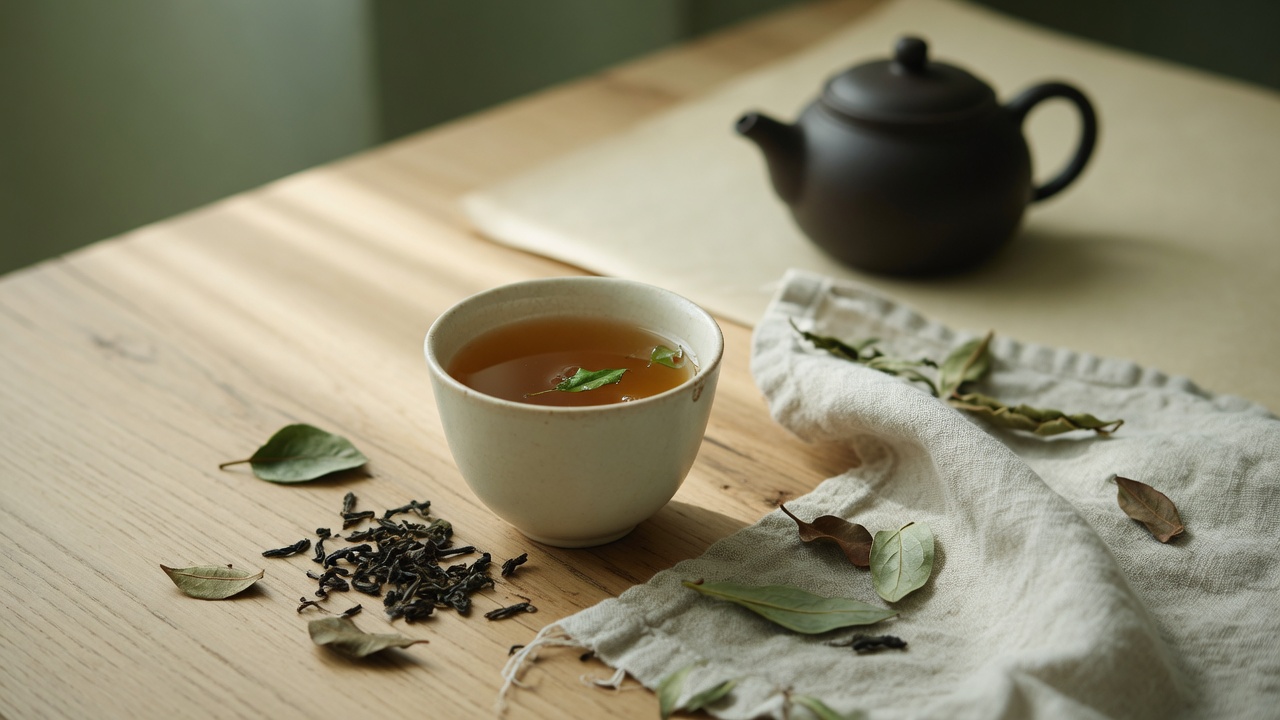
Tea culture is not only a formal room and a school name. It begins the first time you choose a leaf on purpose, heat water with care, and drink without rushing.
This page is the culture entry on Tea with Mind — for people who have never built a tea habit deliberately. It is not a ranking and not “start with matcha or you are wrong.” Matcha is one excellent path among several. Your first job is to understand the map, then pick a first leaf that fits how you actually live.
When you want a runnable sequence, continue into Matcha ceremony at home or the wider Ceremony hub. When you want leaf names and catalogs, open Varieties.
The six families (one plant)
Culture starts with knowing what is in the cup. All true tea is one plant; processing makes the family.
| Family | What processing does | Taste direction (rough) | Beginner friendliness |
|---|---|---|---|
| Green | Heated early so leaves stay green | Fresh, chestnut, vegetal | High — if water is not boiling |
| White | Minimal work; buds and young leaves | Soft, sweet, light | High — cool water, short steeps |
| Yellow | Rare; a gentle “yellowing” step | Soft, honeyed green | Medium — harder to find |
| Oolong | Partial oxidation; many styles | Floral to roasted | High — flexible and fun |
| Black | Fully oxidized | Malt, fruit, cocoa | High — forgiving with hotter water |
| Pu-erh | Fermented / aged (sheng or shou) | Earth, wood, sweet depth | Medium — start with ripe (shou) if curious |
Matcha is green tea stone-ground to powder. You drink the leaf itself, so body and caffeine feel different from a steeped green. It is not a seventh family; it is a form of green tea with its own tools.
Named variety guides already live on this site: Longjing and Matcha. The full catalog is on Varieties.
What to buy for cup one
Keep the shopping list short:
- One leaf you will finish — 50–100 g of a green or light oolong is enough to learn. Avoid giant variety packs that go stale. A solid starter green: HANDPICK Green Tea Loose Leaf ($11.99, 255g). For black tea starters: Harney & Sons English Breakfast.
- Water you can control — a kettle with temperature marks, or boiled water rested a few minutes for greens. A temperature-control kettle takes the guesswork out if you brew green or white tea.
- One vessel + one cup — glass or porcelain; a porcelain gaiwan set ($16.99) includes the bowl, lid, and cup. See Teaware for beginners when you are ready to choose on purpose. For a sampler of multiple varieties, the Tiesta Tea Discovery Set gives you 8 options in small portions.
You do not need a full Gongfu tray, a wall of Yixing pots, or a ceremonial matcha kit on day one. Hospitality can be one cup and attention.
First brew (loose leaf) — the smallest ceremony
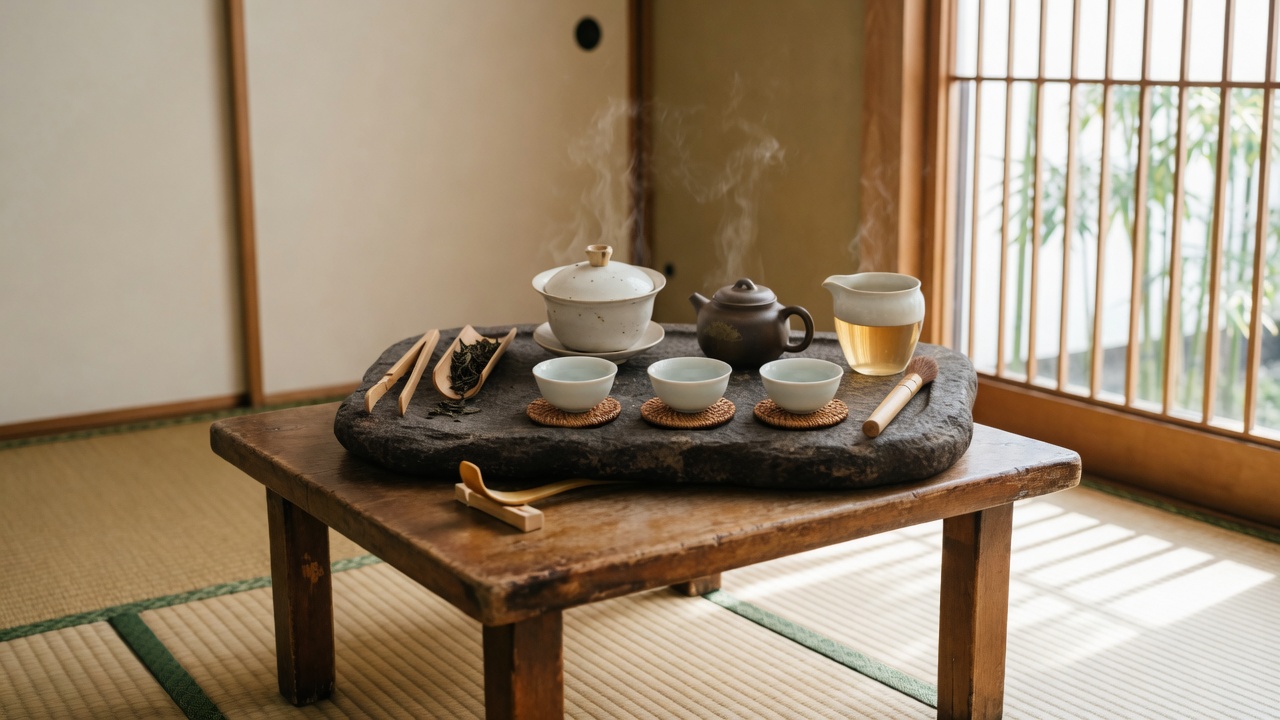
Use this as a starting line, then adjust:
- Leaf: about 3 g per 150–200 ml (a heaping teaspoon of most rolled leaves)
- Water: 80 °C for green/white; 90–95 °C for many oolongs; near boiling for most black teas
- Time: 45–90 seconds first steep; taste; then decide longer or shorter
- Second steep: almost always worth it — many teas open on pour two
If the cup is bitter: cooler water, less leaf, or shorter time. If it is thin: a little more leaf or ten more seconds.
A visual tea timer helps you hit the 45-90 second window without checking your phone. And a glass gaiwan lets you watch the leaves unfurl — a visual cue that’s more useful than a timer for green and white teas.
Parameters as a library live in Brewing. A whisked path later: matcha guide or matcha latte. A full home sequence: matcha ceremony.
How to learn tea ceremony (without a school)
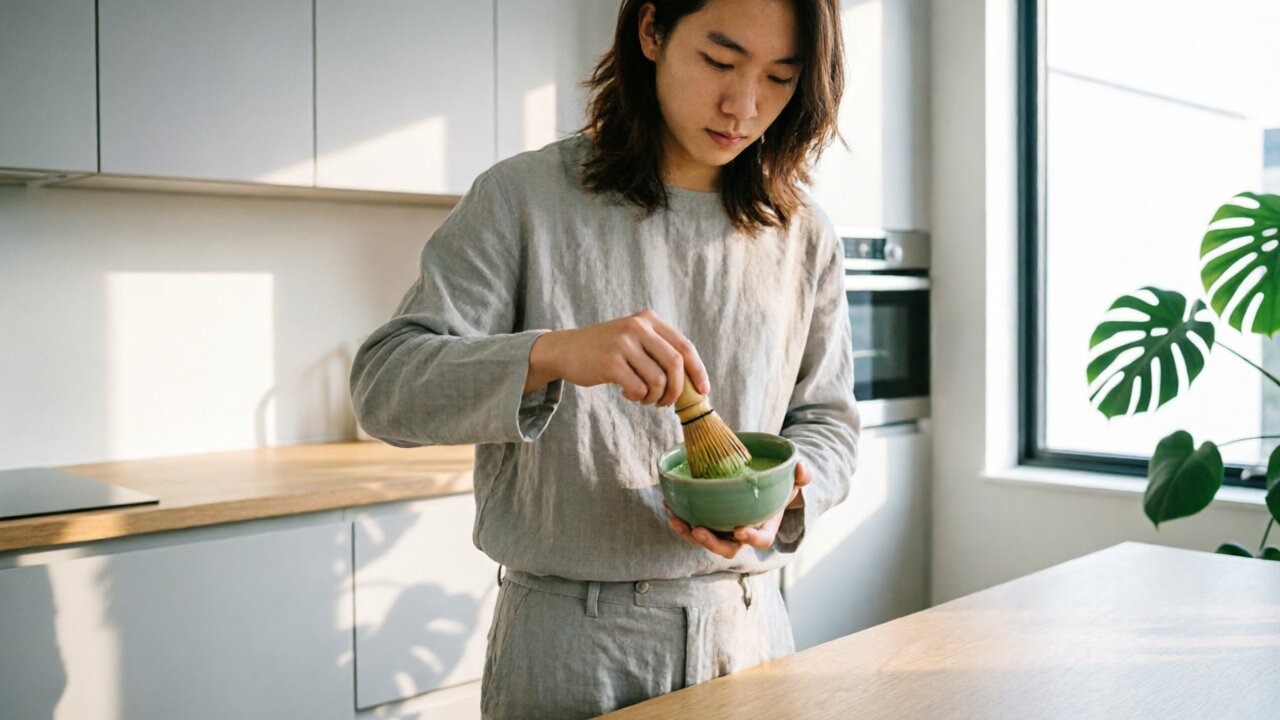
Many beginners search for “how to learn tea ceremony” and assume they need a formal teacher. You do not — not for the first months. Here is a realistic path:
- Build a daily cup first. Before any ceremony sequence, make tea the same way for two weeks. Same leaf, same water, same vessel. The repetition trains your palate and your hands.
- Pick one tradition to study. Read the Gongfu or Chado guide and choose the one that fits your space and time. Gongfu needs a gaiwan and short steeps; Chado needs a chawan and whisk. Both work in a kitchen.
- Practice one gesture at a time. Don’t try to learn a full temae (Chado sequence) in one sitting. Warm the bowl this week. Add the sift next week. Build muscle memory step by step.
- Improve through tasting, not performance. “How to improve tea ceremony skills” is really about taste feedback — was the water too hot? Did the steep go too long? Each cup teaches the next.
- Join a community when ready. Local tea groups and online forums can give feedback on your pour and your ratio, but they’re optional, not required.
The key difference between a beginner and an intermediate practitioner isn’t knowledge — it’s the number of cups brewed with attention.
Where the culture path goes next
After this page:
- Ceremony — practice, traditions (Gongfu, Chado, Darye, afternoon tea), and principles
- Varieties — named leaves and the six-type catalog
- Teaware — vessels that match how you brew
- Brewing — heat, time, ratio, special cups
- Wellness — caffeine ranges and research notes (not medical advice)
Not sure which tea type fits your taste? Try our starter chooser — it asks a few questions and points you to a first leaf. Named tools from the guides live under Products when you need a SKU with context.
A simple 30-day beginner plan
- Week 1: One green or light oolong; same leaf every day; change only water temperature.
- Week 2: Same leaf; change steep time; keep one-word notes per cup.
- Week 3: Try a second family (e.g. black or white).
- Week 4: Either open a matcha tin or a short ceremony practice — only if you want that path.
If you only remember one idea: tea culture is attention repeated — not equipment, and not a costume.
Where to go deeper
When you are ready for a named leaf, start from Varieties. When you are ready for sequence and meaning, stay on Ceremony.
If you want to understand caffeine levels across tea types, the caffeine by tea type guide breaks down milligrams and brew variables. For brewing fundamentals like water temperature and steeping time, the Brewing hub has type-by-type parameters.
Six Tea Families: Quick Reference
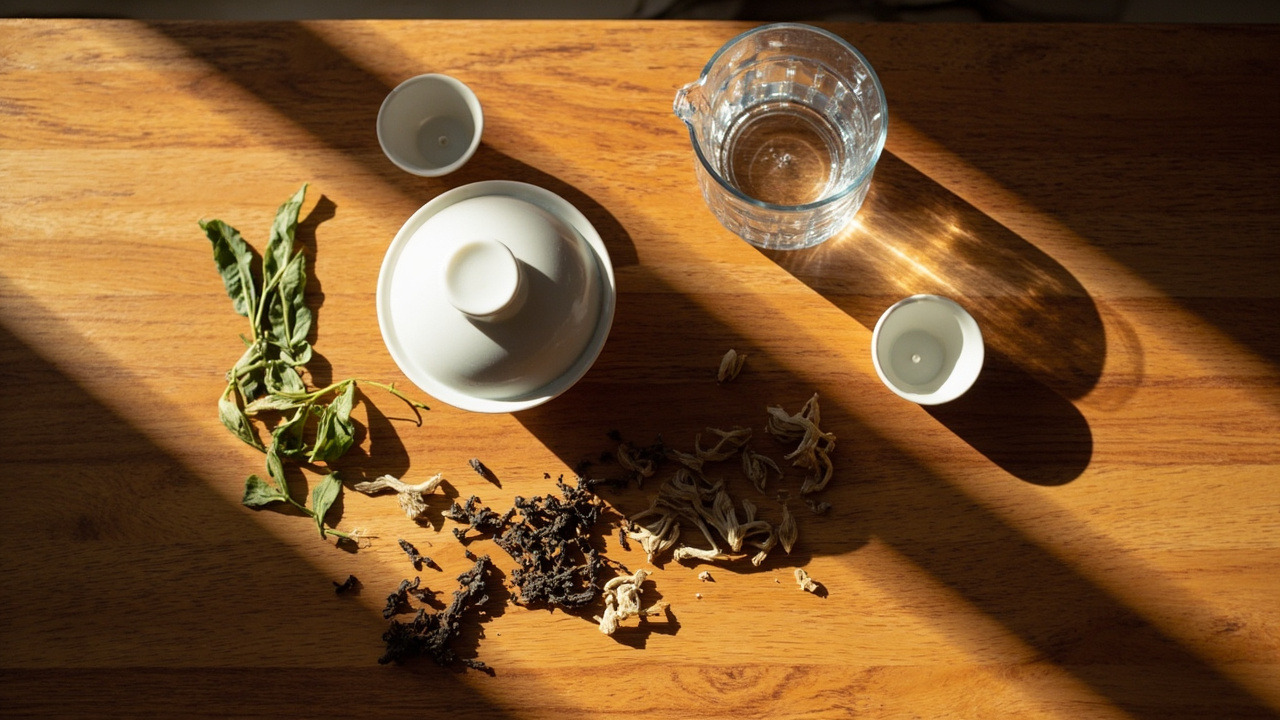
Each of the six tea families comes from the same plant (Camellia sinensis) [1] — the difference is processing:
| Family | Processing | Flavor range | Caffeine | First cup? |
|---|---|---|---|---|
| Green | Unoxidized, pan-fired or steamed | Vegetal, grassy, nutty | Low-medium | Great starter — familiar, forgiving |
| Black | Fully oxidized | Bold, malty, fruity | High | Easy entry — familiar in the West |
| Oolong | Partially oxidized (10-90%) | Floral to roasted, complex | Medium | For when you want to explore flavor layers |
| White | Minimal processing, sun-dried | Delicate, honeyed, subtle | Lowest | Good for patient, quiet tasting |
| Yellow | Lightly oxidized + men-huang (yellowing) | Mellow, sweet, gentle | Low-medium | Rare — worth trying after green |
| Pu-erh (Dark) | Fermented/aged | Earthy, deep, smooth | Medium | Acquired taste — try after exploring the above |
First Cup Path: Which Family to Try First
Not sure where to start? Pick based on what you already enjoy:
- You drink coffee and want something bold: Start with black tea. Harney & Sons English Breakfast is the gateway.
- You like delicate flavors and have patience: Start with white tea. See our Silver Needle guide.
- You want the health-focus angle: Start with green tea. HANDPICK Green Tea ($11.99) is the affordable daily option.
- You want to geek out on flavor: Start with oolong. Multiple steeps from the same leaf reveal how flavor evolves.
- You want caffeine without jitters: Any family works — L-theanine in tea modulates caffeine absorption [2]. See our tea and meditation guide for the science.
For the full brewing parameters on each family, see our green tea brewing guide, how to brew black tea, and yellow tea brewing guide.
The Mind of Beginnings
Every tea drinker was once a beginner holding a too-hot cup, unsure how long to wait. The path does not demand expertise on day one. Pick one tea, brew it three times this week, and notice what changes. The six families will still be there when you are ready to explore further. Today, one cup is enough.
References
[1] China Tea Marketing Board. China Tea Classification Standard (CB/T 30766–2014). Defines the six-family classification system based on processing method.
[2] Nobre AC, Rao A, Owen GN. “L-theanine, a natural constituent in tea, and its effect on mental state.” Asia Pacific Journal of Clinical Nutrition. 2008;17(S1):167–168. https://pubmed.ncbi.nlm.nih.gov/18296328/