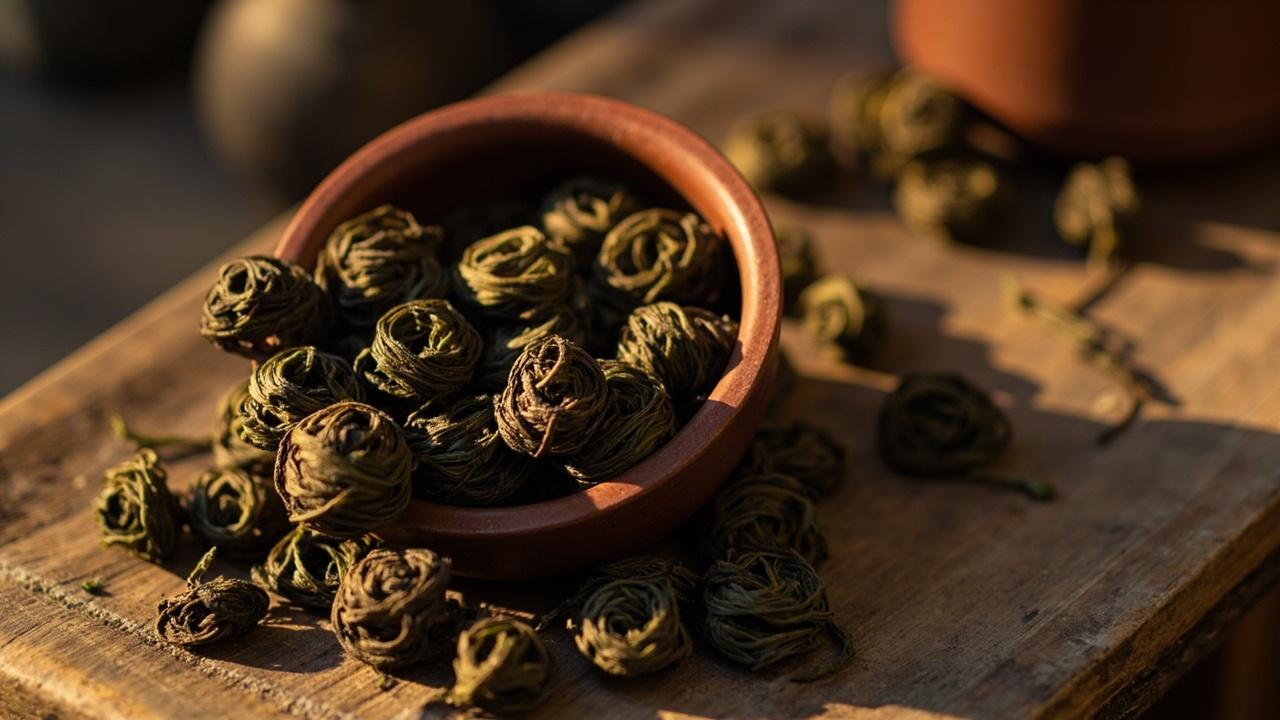
Tieguanyin (铁观音, “Iron Goddess of Mercy”) is Anxi County’s signature rolled oolong — built for orchid aroma and a long gongfu multi-infusion life [2]. This hub covers Qingxiang vs Nongxiang grades, brewing, and buying.
| Ask | Answer |
|---|---|
| What is it? | Rolled, partially oxidized oolong from Anxi, Fujian — not a green tea |
| Caffeine? | ~30–50 mg per 8 oz cup; a full gongfu session can match 1–2 mugs |
| How to brew? | 5–7 g per 100–120 ml gaiwan at ~95 °C; 15–20 s first steep; 5–8 infusions |
Origin
Tieguanyin sits in the middle of the oxidation spectrum: partially oxidized oolong, not green tea, even when a bag says “green” for marketing [2]. The name 铁观音 (Tiěguānyīn) glosses as Iron Guanyin or Iron Goddess of Mercy — a cultural nod, not a flavor claim [2]. Commercial production centered on Anxi County, Fujian, where the cultivar and rolling style became the reference for Chinese floral oolong.
Why it earns a permanent place on a home shelf:
- Multi-infusion value — one gaiwan charge often yields 5–8 cups, so cost-per-session stays low even on better leaf.
- Orchid signature — good lots smell and taste floral (orchid / lilac), not just “tea-like.”
- Two modern grade styles — Qingxiang (clear fragrance) and Nongxiang (strong fragrance) give you a real choice of roast depth, not one generic bag.
If you already drink Chinese greens such as Longjing, Tieguanyin is the next step into rolled oolong. If you know powdered Japanese green like Matcha, this is the opposite form: whole leaf, short steeps, many rounds. You don’t need a full ceremony kit on day one — leaf, hot water, and a simple vessel are enough. I keep one Anxi tin on the shelf year-round for that orchid first cup. For origin context, see Tieguanyin on Wikipedia [2].
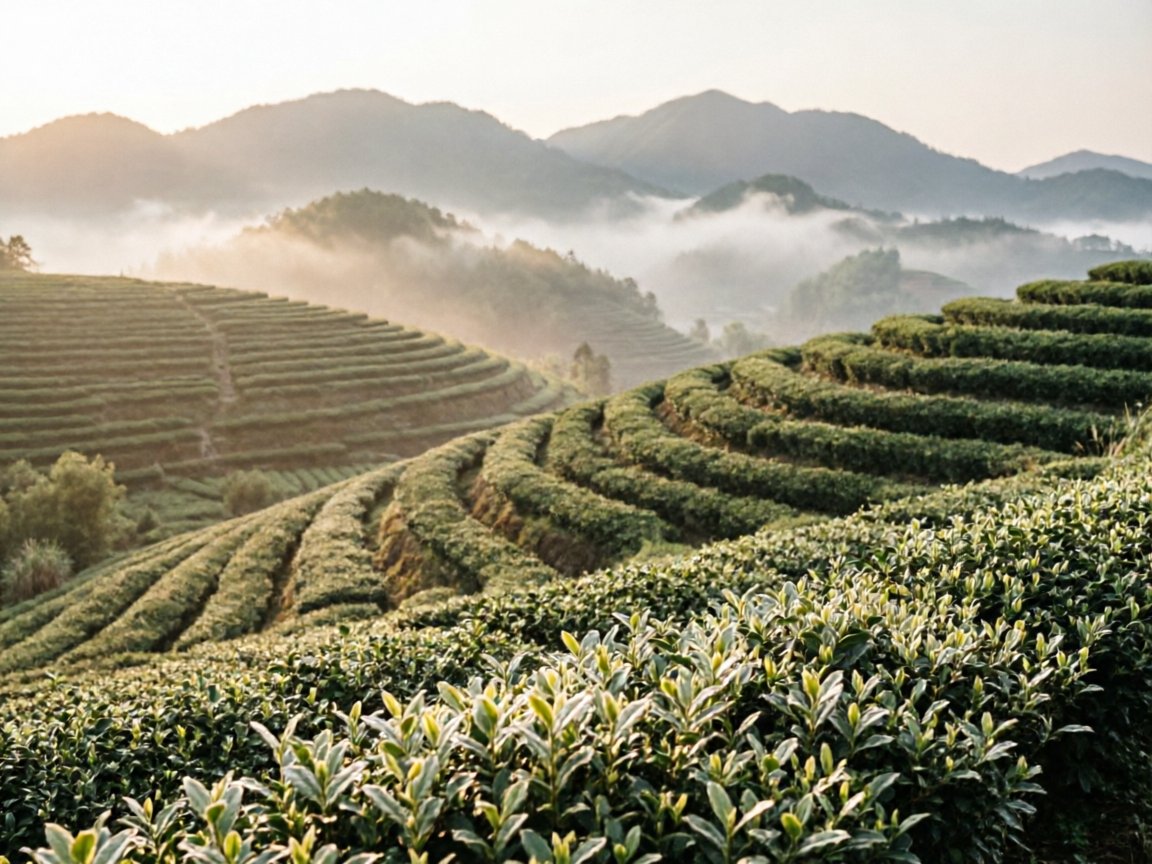
Tieguanyin is one node in the oolong family. Browse all tea varieties for sister hubs: Matcha (powdered green), Longjing (Chinese green), and Da Hong Pao (Wuyi rock oolong). Gear and method: how to choose a gaiwan and how to brew oolong tea. Still to come: a Taiwan high-mountain overview and an oolong hub.
Look
The biggest buying mistake is assuming every “Iron Goddess” bag is the same tea. Qingxiang and Nongxiang share the Tieguanyin cultivar family; the split is processing, not a different plant species [2].
| Style | Chinese | Oxidation / roast | Aroma | Liquor | Best for | Starter pick |
|---|---|---|---|---|---|---|
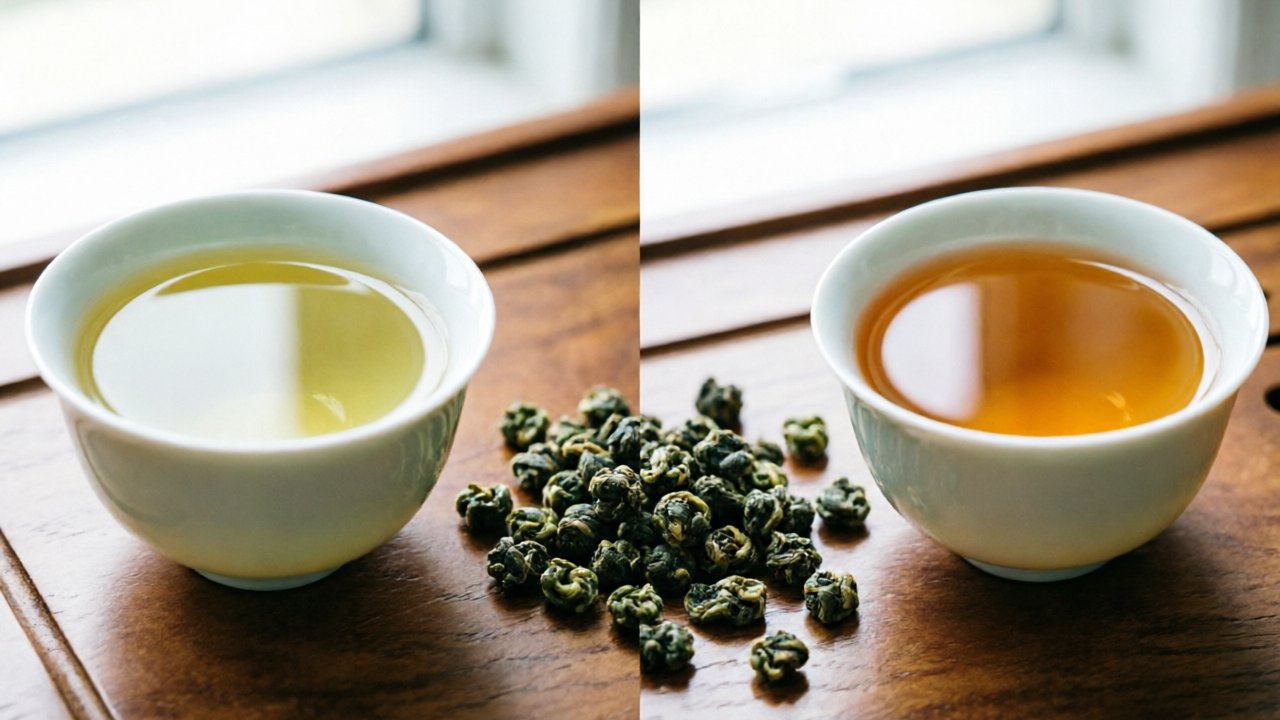
| Qingxiang | 清香 “clear fragrance” | lighter oxidation, greener, fresher | bright orchid, lilac, creamy | pale jade–yellow | beginners, summer, floral focus | FullChea Orchid Aroma · Tealyra Tie Guan Yin |
| Nongxiang | 浓香 “strong fragrance” | higher roast / deeper bake | toasted orchid, honey, charcoal edge | gold–amber | traditional drinkers, cooler weather | Oriarm Anxi 250g (check lot roast notes) |
| Taiwan-style / high-mountain “Tieguanyin-style” | — | often greener, creamier | floral-creamy | pale | compare only | not a substitute for Anxi PDO claims |
| Aged / charcoal-roasted specialty | multi-roast | dried fruit, woody | deep amber | advanced only | specialty shops |
Retail bags often omit style. Read for cues: “light,” “orchid aroma,” “clear fragrance” → Qingxiang; “traditional roast,” “strong fragrance,” “baked” → Nongxiang [2]. Authenticity cues: Anxi / 安溪 on the package, tight rolled pellets that unfurl over infusions, and a clean floral or roasted-orchid dry aroma [3]. If the label won’t say Anxi or style, you’re guessing more than buying. Qingxiang for florals, Nongxiang for breakfast-strength roast — decide before paying.
Character
Five short stages explain the rolled ball you see in the tin [2]:
Plucking
Spring and autumn are the main harvests. Makers usually take one bud with two or three leaves — enough substance for rolling without coarse late-season bulk.
Withering and tossing (摇青, yáo qīng)
Leaves wither, then get tossed so edges bruise. That edge oxidation builds the floral precursors that later read as orchid in the cup.
Fixation (杀青)
Heat stops enzyme activity. Timing here locks how “green” vs “roasted” the lot will feel before any charcoal bake.
Rolling into tight balls
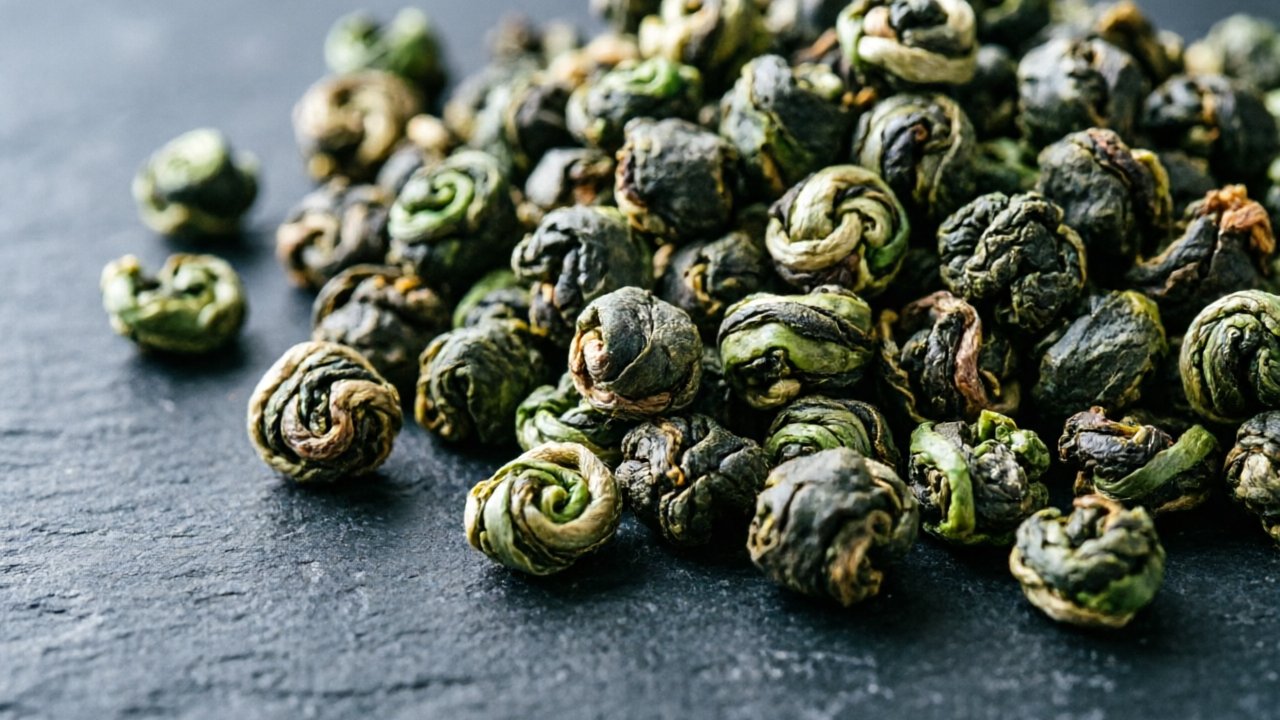
The signature “dragon pearl” shape is not decoration. Tight rolls slow extraction, which is why short gongfu steeps work and long Western steeps stew the leaf.
Drying and optional charcoal roast
Qingxiang stays on a lighter dry path. Nongxiang takes a deeper roast or charcoal bake for honey, toast, and amber liquor [2]. Roast depth is measurable: GC-MS aroma fingerprints plus chemometrics separate Nongxiang grade levels [4].
Dry leaf looks like dark green or brown-green pellets. By infusion three or four, wet leaves should open whole and elastic — shredded dust is a low-grade signal. That’s your visual quality check after the first few steeps.
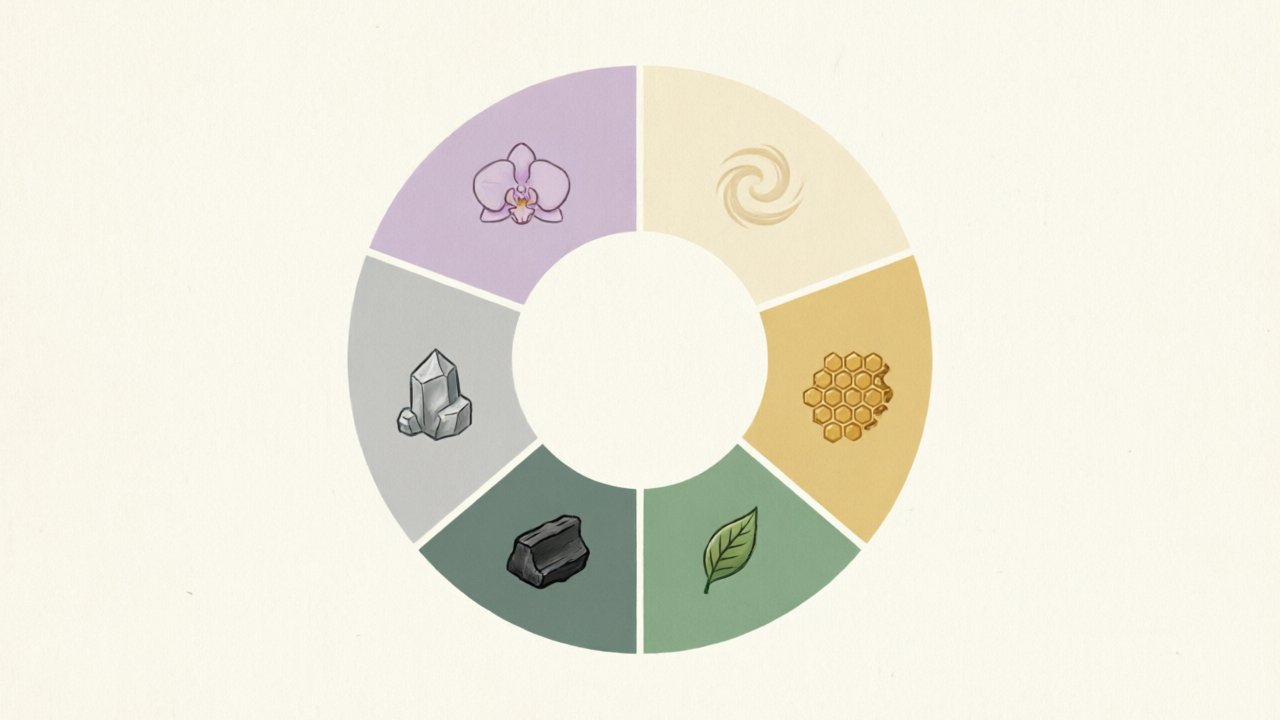
Tieguanyin’s reputation rests on orchid-like florals, not smoke or heavy malt [2]. Use these dimensions when you smell dry leaf, liquor, and wet leaf:
- Orchid / lilac floral — hallmark of good Qingxiang Anxi lots
- Cream / butter — mouthfeel on high-grade spring leaf
- Honey / toasted grain — Nongxiang roast contribution
- Ocean mineral / green bean — under-oxidized or low-grade off-notes
- Charcoal / smoke — heavy roast; intentional on some Nongxiang, not a defect by default
- Hui gan (回甘) — returning sweetness after swallow — a quality signal on the palate, not a wellness promise
Dry leaf should smell clean floral or roasted orchid — dusty or sour means age or storage stress. Liquor: Qingxiang pale jade; Nongxiang gold-amber. Wet leaf: open, whole, elastic. For neutral cupping vessels and aroma focus, see teaware for tasting. You’ll learn more from one careful session than from label copy alone.
If you want a small tin aimed at floral education, FullChea Anxi Orchid Aroma 4 oz is built around that profile language. This tracks chemistry: GC-MS comparisons of Tieguanyin, Fenghuang Dancong, and Da Hong Pao found distinct volatile fingerprints — cultivar and processing decide the aroma, not the label [5].
Ware
Use package cues, not brand mythology [3]:
- Origin wording: Anxi / 安溪 / Fujian — not only “China oolong”
- Shape: tight, heavy rolled pellets (not flat green spears)
- Style disclosed: Qingxiang / light / orchid vs traditional roast / Nongxiang
- Harvest window if stated (spring preferred for florals)
- Price sanity: ultra-cheap bulk can be blended non-Anxi oolong
Sellers who disclose roast, harvest season, and lot details are easier to re-buy from.
Amazon lots vary. Use style, aroma, and multi-infusion behavior as home quality tests — not lab purity certificates [3].
Use-case picks (leaf):
- Budget first cup → Tian Hu Shan Iron Goddess 4 oz
- Daily bulk → FullChea Anxi 250 g
- Premium Anxi session → Oriarm Anxi 250 g
- Classic starter tin → Tealyra Tie Guan Yin 110 g
Leaf first, then vessels. Prices float; use the links for current listings.
| Pick | Best for | Link | Price (API) |
|---|---|---|---|
| Tealyra Tie Guan Yin 110 g | starter floral tin | B00D7MN5H8 | $13.99 |
| FullChea Anxi 250 g | best-value daily bulk | B0851NRQXZ | $13.99 |
| Tian Hu Shan Iron Goddess 4 oz | best-budget first tin | B08M3NV9PL | $9.99 |
| Oriarm Anxi 250 g | premium gongfu sessions | B07G5Y5CR2 | $22.70 |
| FullChea Orchid Aroma 4 oz | orchid taste education | B079NG54MR | $11.99 |
| Liang baobao Gaiwan 200 ml | brew vessel | B0BDZ4GKM8 | $15.90 |
| YULONGSHENG Yixing 220 ml | dedicated oolong pot | B0GD6GVGX8 | $17.99 |
| REOWONU Gongfu set | multi-guest setup | B0D49DFXJ3 | $47.99 |
Start with one Qingxiang tin plus a porcelain gaiwan. Add bulk Anxi leaf once you know your preferred roast depth. Keep Yixing for a single style so the pot doesn’t muddle florals with charcoal roast. You’re building a small kit, not a shop inventory.
Ritual
Rolled oolong rewards short, hot, repeated steeps — not one long mug. If you are new to leaf tea, start with tea for beginners, then use the steeping time tool and brewing ratio tool to dial grams and minutes.
Western mug method
| Param | Value |
|---|---|
| Leaf | 3 g per 250 ml mug |
| Water | 90–95 °C (Qingxiang prefers the cooler end; Nongxiang tolerates hotter) [1] |
| Time | 2–3 min first steep; +30–45 s each re-steep |
| Steeps | 2–3 |
A five-minute first steep on tight balls often tastes stewed and bitter. Keep Western steeps short if you want orchid, not spinach. You can’t rush rolled leaf the way you might a teabag.
Gongfu multi-infusion (primary method)
Typical starting point: about 1 g leaf to 15–20 ml water — denser than Western brewing.
| Infusion # | Leaf : water | Temp | Time | Notes |
|---|---|---|---|---|
| Rinse (optional) | 5–7 g / 100–120 ml gaiwan | 95 °C | 3–5 s, discard | wakes rolled balls |
| 1 | same | 95 °C | 15–20 s | floral peak often starts here |
| 2 | same | 95 °C | 10–15 s | often strongest orchid |
| 3–4 | same | 95 °C | 20–30 s | body thickens |
| 5–7 | same | 95–98 °C | 30–45 s+ | sweet aftertaste (回甘) |
| 8+ | same | 98 °C | 45–60 s+ | optional; stop when thin |
Hotter and longer pulls more bitterness and more caffeine; cooler and shorter keeps florals clearer [1]. Use the table as a home-practice ladder, not a lab protocol — starting ratios from our brewing-ratio calculator and steeping-time guide.
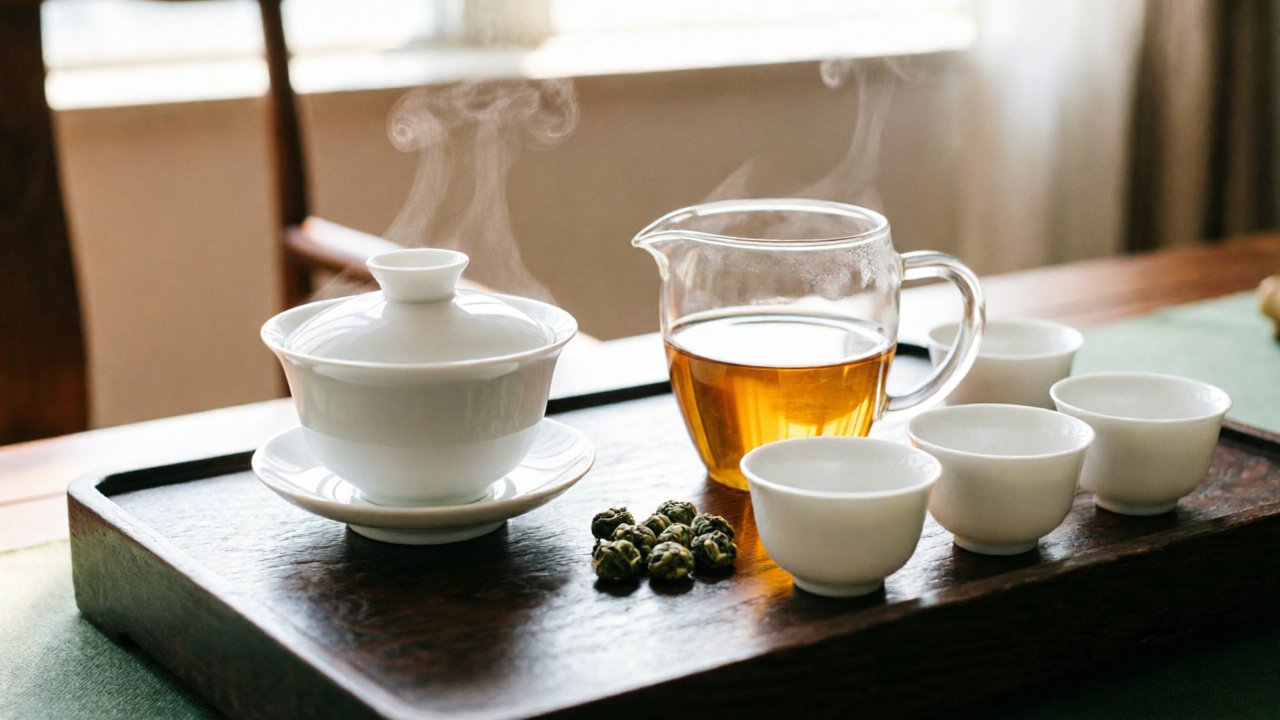
Vessel. Porcelain gaiwan stays neutral for Qingxiang tasting — a Liang baobao 200 ml white gaiwan is enough for daily sessions. Once you lock a favorite roast style, a dedicated YULONGSHENG Yixing 220 ml pot can hold aroma over months of Nongxiang. For multi-guest pours, a REOWONU gongfu set (gaiwan + cups) keeps service clean. It’s worth starting simple: teaware for beginners covers the minimum path; the gongfu basics guide and how to choose a gaiwan cover the rest.
Style adjustments: Qingxiang vs Nongxiang
Heat and opening time are the dials that move (same 5–7 g gaiwan baseline):
| Style | Water temp | Early steeps | Why |
|---|---|---|---|
| Qingxiang | ~90–95 °C | short end of the 15–20 s first steep | protects orchid top notes |
| Nongxiang | 95–98 °C | slightly longer opens | pulls the toast-honey layer forward |
Lean low on the gongfu range for delicate Qingxiang, high for charcoal roasts; the same Liang baobao 200 ml gaiwan handles both.
Common mistakes
- Boiling water on delicate Qingxiang — cooked spinach, lost orchid. Stay near 90-95 °C [1].
- Western 5-minute first steep on rolled balls — bitter and stewed. Use short gongfu or 2–3 minutes max in a mug.
- Buying “green Tieguanyin” as green tea — it is oolong; oxidation and multi-infusion rules differ [2].
- Ignoring style labels — expecting roast depth from Qingxiang, or bright florals from heavy Nongxiang [2].
- Storing open in a clear jar on a sunny shelf — floral volatiles fade in weeks. Use airtight, dark, cool storage after opening.
Benefits
Oolong infusions typically land around 30–50 mg caffeine per 8 oz-style cup [1]. Gongfu uses more leaf per water, but each steep is short — total session caffeine can match or exceed one Western mug. Don’t assume “light tea” just because the cup smells floral.
Caffeine isn’t the only compound in play. One study tracking three Tieguanyin flavor types through manufacture found fresh, floral-scented lots retained more catechins and L-theanine than deeper-processed ones — your style choice changes what you steep out of the leaf [6]. Composition note, not a health claim.
Session math, roughly: 5 g over 5–8 short infusions extracts less per cup than one long steep, but the total adds up. Leaf weight, temperature, and steep count change the caffeine in the cup [7]; a long session on generous leaf can land in the range of one to two mugs (each ≈ 30–50 mg) [1]. An estimate, not a lab result.
For ranges across tea forms, read caffeine by tea type (research summary only — not medical advice); the gongfu session tool logs pours.
Boundary note: composition and brewing arithmetic, not medical guidance — site policy at wellness and health information [8].
The Mind of Tieguanyin
From Anxi’s rolled leaves, orchid fragrance opens only when heat and patience meet in the gaiwan. Short gongfu infusions, not a single long steep, teach the leaf to speak across five or more cups. Qingxiang stays bright and floral; Nongxiang deepens like evening roast. Brew slowly, taste the unfurling, and the Iron Goddess answers in the cup.
References
[1] USDA FoodData Central. Beverages, tea, brewed. https://fdc.nal.usda.gov/ — caffeine values for brewed teas. Oolong typically 30–50 mg per 8 oz cup; varies by leaf mass, temperature, and steeping time.
[2] Wikipedia contributors. Tieguanyin. https://en.wikipedia.org/wiki/Tieguanyin — Anxi County origin, name aliases (Iron Goddess / Iron Guanyin), partial oxidation and tossing/rolling process, Qingxiang vs Nongxiang processing styles.
[3] Wikipedia contributors. Anxi County. https://en.wikipedia.org/wiki/Anxi_County — geographic origin and tea production context for package-reading cues.
[4] Wang W, Jin S, Guo Y. “Exploration of a Method of Distinguishing Different Nongxiang Tieguanyin Tea Grades Based on Aroma Determined by GC-MS Combined with Chemometrics.” Molecules. 2019;24(9):1707. https://doi.org/10.3390/molecules24091707 — GC-MS fingerprints separate Nongxiang grades.
[5] Li Z. “Comparative analysis of Fenghuang Dancong, Tieguanyin, and Dahongpao teas using headspace solid-phase microextraction coupled with gas chromatography-mass spectrometry and chemometric methods.” PLOS ONE. 2022;17(10):e0276044. https://doi.org/10.1371/journal.pone.0276044 — distinct volatile fingerprints per tea.
[6] Zeng L, et al. “Dynamic changes in metabolites during the manufacture of three distinct flavor types of Tieguanyin.” Food Chemistry. 2025;487:144744. https://doi.org/10.1016/j.foodchem.2025.144744 — floral-scented lots kept more catechins and L-theanine.
[7] Chin JM, et al. “Caffeine Content of Brewed Teas.” Journal of Analytical Toxicology. 2008;32(8):702-704. https://doi.org/10.1093/jat/32.8.702 — brewing parameters change caffeine in the cup.
[8] TeaWithMind. Wellness and health information. /terms/#wellness-health-information — wellness content is informational, not medical advice.