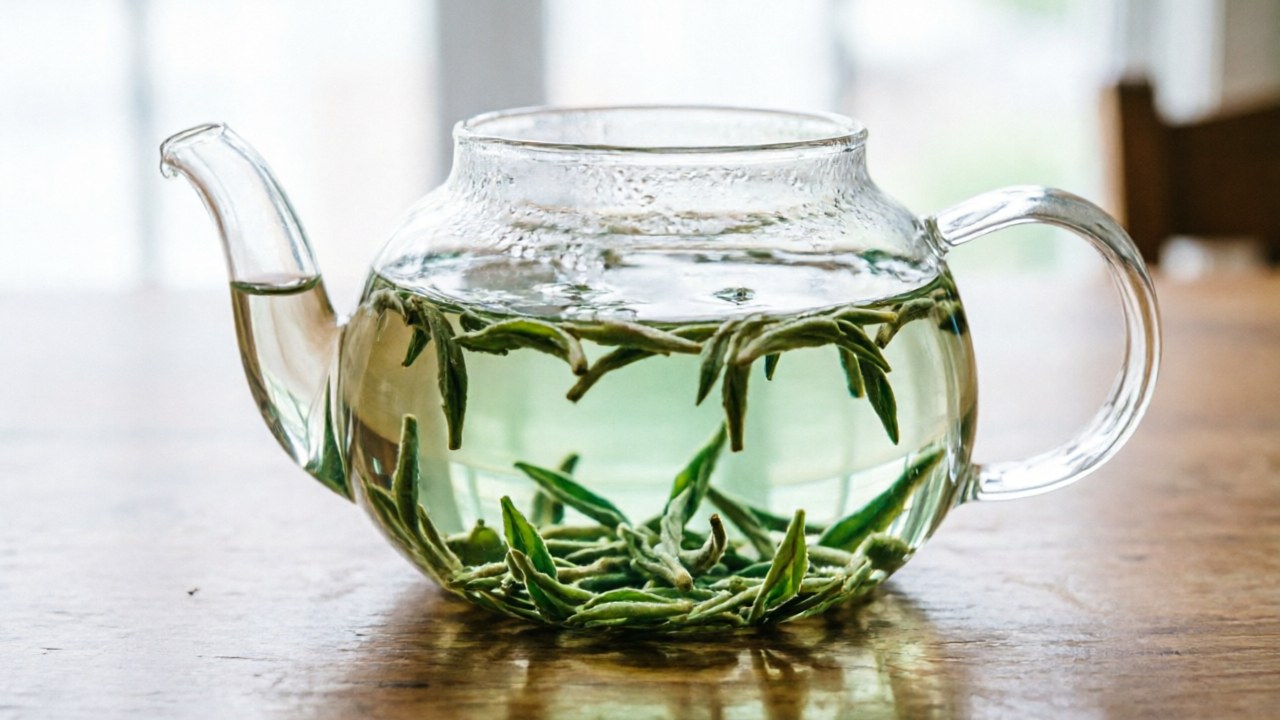
Green tea rewards leaf shape more than a single temperature chart. Flat Longjing, needle sencha, and rolled gunpowder need different room to open — in a glass pot, mug basket, or short multi-infusion vessel — plus a bitterness clinic that goes past “too hot.” This is the By-leaf green classroom, not matcha latte or a first-cup general tour.
Why Green Leaf Gets Its Own Classroom
Unoxidized green leaf is heat- and time-sensitive [1]. Cooler water and short steeps aren’t style points — they’re how you keep the cup sweet and clear. Once you’ve scorched a good tin at a rolling boil, you’ll notice the difference next time you land in the right band.
This page isn’t the multi-leaf first cup system. It isn’t the powder-and-whisk matcha latte path either. Soft ceremony sequences live under tea for beginners if you want them later.
Here we stay on green leaf only: Chinese and Japanese parameters, Western brew first, and optional short multi-infusion as a method, not theater. The lane sits under How to brew each kind of tea. Shape → kit → Western steps → bitterness clinic → re-steep → one practice path.
What You Need — Green Brew Kit
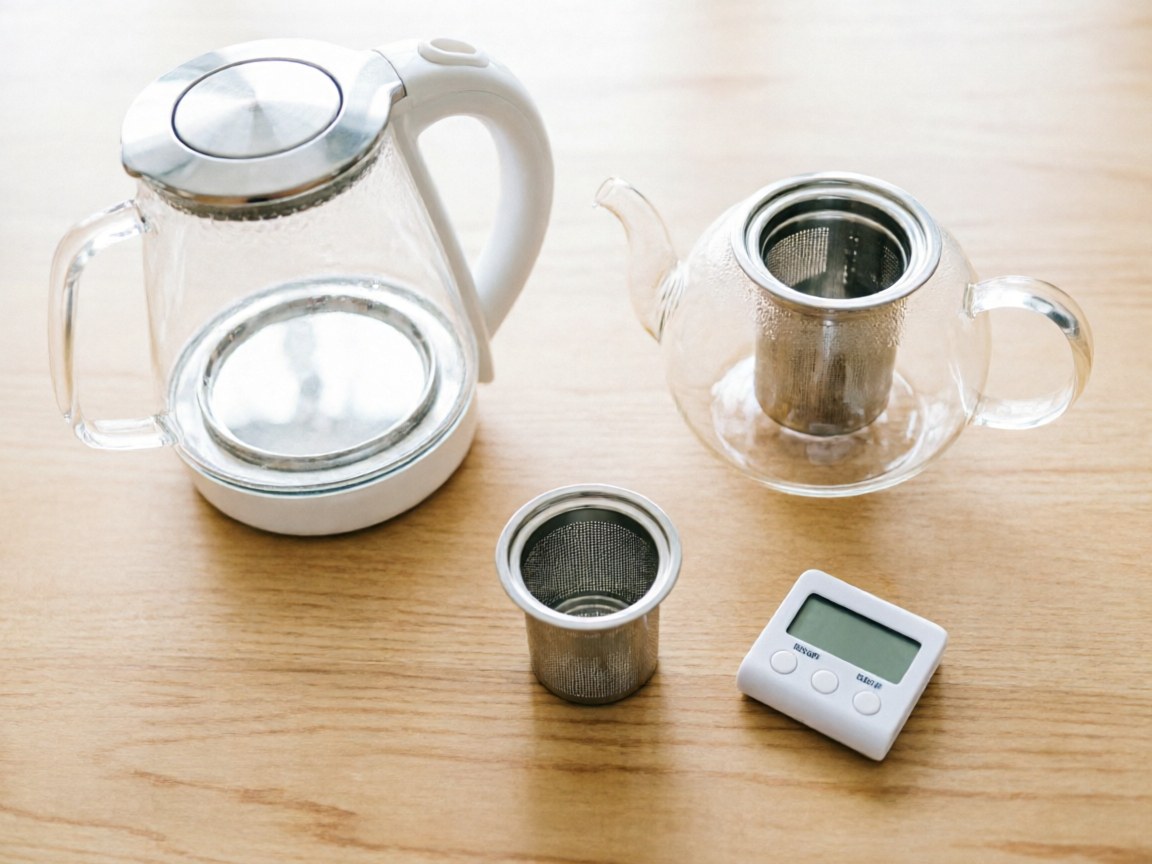
A small kit covers heat, vessel, timing, and a practice leaf. You don’t need a full tray on day one — heat control and room for leaves matter more than matching porcelain.
| Role | Why for green | Product |
|---|---|---|
| Heat | Hit 160–180°F without guesswork | Chefman temp kettle |
| Glass vessel | Watch flat and needle leaves open | HIWARE glass teapot |
| Mug path | Large basket beats a crushed ball | Yoassi basket infuser |
| Timer | 1–3 min steeps; bitterness is often “forgot” | Antonki timer |
| Practice A | Chinese sampler before bulk wrong | iTeaworld 4-flavor |
| Practice B | Japanese sencha cooler band | YAMASAN Uji sencha |
Starter vessel context: teaware for beginners and teaware for tasting.
Leaf Shape → Ratio and Time
Not “1 tsp forever.” Shape changes volume vs weight and how leaves open. Use the leaf-to-water ratio tool when you want numbers, and the steeping time tool for windows.
Flat (Longjing / Dragon Well style)
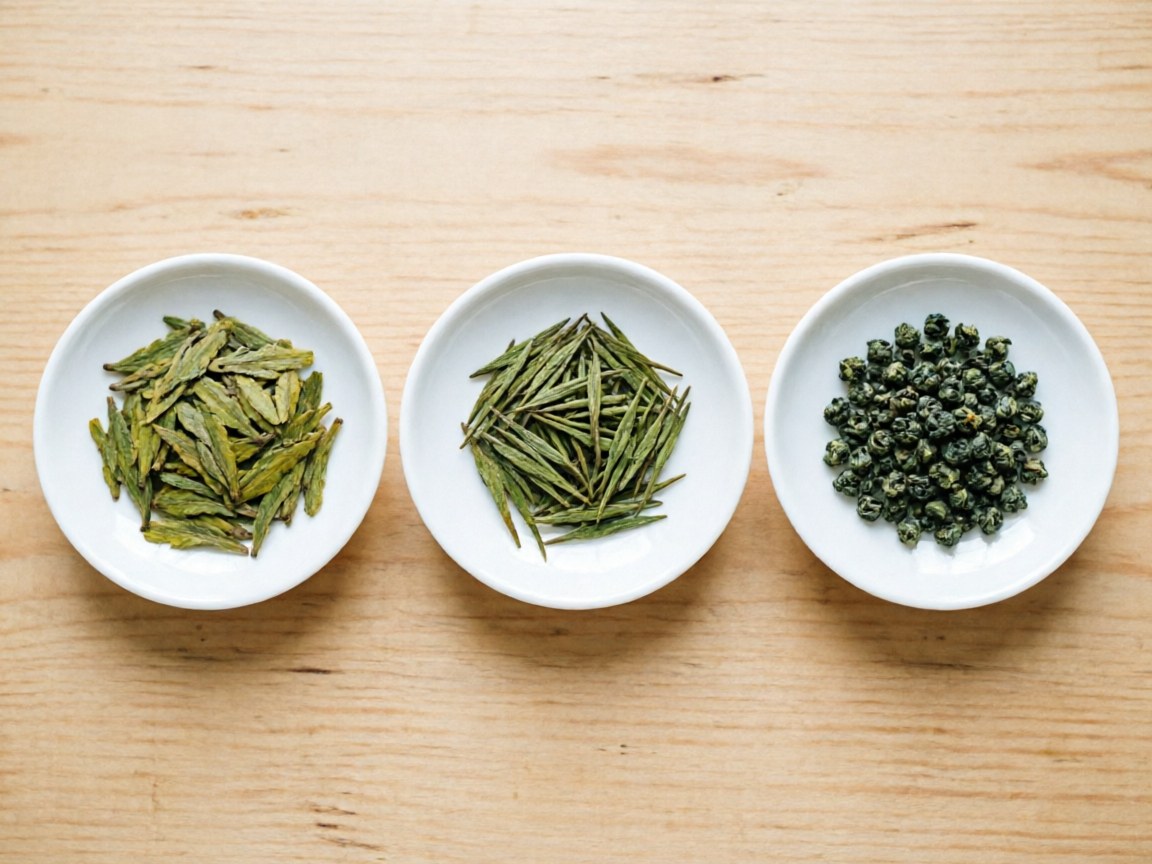
Leaves sit like flakes. They need horizontal room, not a tight mesh ball. Start about 2 g per 240 ml; Western 2–3 min in the Chinese green band. Practice leaf: FullChea Longjing with the Yoassi basket or glass pot. Deep-dive: Longjing Dragon Well [3].
Needle (sencha / many Japanese greens)
Needle stacks denser by volume. Cooler 160–170°F is often kinder. Start about 2 g per 200–240 ml; Western 1–2 min first cup — taste early. A Japanese side-handle kyusu is the traditional vessel for sencha — see how to choose a kyusu for sizing and clay notes. Practice leaf: YAMASAN Uji sencha [2].
Rolled / tight (gunpowder-style greens)
Rolled greens need more time or a second pour to open. Don’t crank heat to force them. Prefer a roomy glass pot over a tiny ball.
Water for Green — JP vs CN Bands
Generic charts already own 160–180°F. Here we map bands to leaf path, not restating a wall chart.
- Japanese sencha band: about 160–170°F (70–77°C) — cooler first
- Chinese greens / Longjing band: about 170–180°F (77–82°C)
Cool-from-boil hack: off boil 2–3 minutes if you don’t have presets. Better: a temp-control kettle so you’re not guessing. Fresh water each boil — reboiled water tastes flat and harsher on green. No milk in this classroom; keep the liquor plain so leaf shape and heat do the talking.
Western Brew for Green — Step by Step
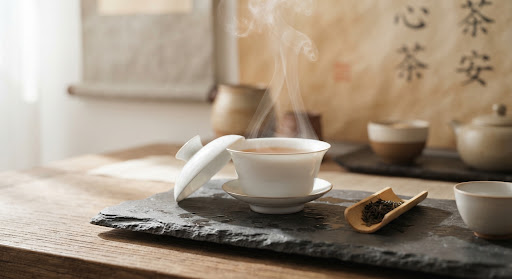
Five kitchen steps — heat, vessel, leaf, timed steep, taste.
- Heat to your leaf-path band (JP cooler / CN mid) with the Chefman kettle.
- Warm the vessel lightly if you like — it stabilizes cool pours.
- Leaf in by shape. Flat needs a roomy basket or glass pot. Avoid a crushed ball.
- Steep timed in the 1–3 min window with an Antonki timer. Remove the leaves — never leave the basket in the mug.
- Taste liquor color and aroma. Next cup: weak → add leaf or less water; bitter → cut time first, then heat, then leaf. That order saves more cups than swapping brands.
Practice while learning: Chinese sampler or Uji sencha. Brand new to all tea? Start with the first cup system, then come back here for green-only detail.
Optional Short Multi-Infusion for Whole-Leaf Green (Method Only)
This isn’t Gongfu theater or a 21-step ceremony. It’s a home method for whole-leaf green that still has life after cup one.
Use a simple Cididu gaiwan set or a small glass pot. Higher leaf load in a small vessel; short pours (about 15–40 seconds) across several infusions; lengthen gently later.
Full ceremony sequences live under tea for beginners. Powder special stays on the matcha latte page.
Bitterness Clinic for Green
Beyond “too hot.” Most home bitterness is fixable.
| Cause | Fix | Tool |
|---|---|---|
| Water too hot | Drop to JP/CN band | Chefman kettle |
| Over-steep | Stop at 1–3 min; remove leaves | Antonki timer |
| Overleaf / crushed ball | Roomier basket; measure by weight when you can | Yoassi basket |
| Flat reboiled water | Fresh cold fill each time | kettle habit |
| Ball trap on flat Longjing | Basket or glass pot, not mesh ball | glass pot |
Fix order: cut time → cool water → give leaves room → then reduce leaf. Support tools: steeping time and brewing ratio.
Re-Steep Rules for Green Leaf
Many whole-leaf greens give 2–3 useful Western re-steeps if cup one didn’t cook the leaves.
Second steep: same or slightly warmer heat, shorter first then taste (or +15–30 s if thin). Don’t leave twice as long by default — that’s how a clean first cup turns harsh on round two. Discard when liquor goes hollow, hay-like, or harsh. Short multi-infusion (prior section) is the structured version of re-steep. A glass pot with basket makes re-steep easy — leaves stay put between pours.
Practice Path — Chinese Sampler OR Japanese Sencha
Pick one path for 1–2 weeks before variety rabbit-holes.
Path A — Chinese green sampler
Start with the iTeaworld 4-flavor sampler (Longjing, Biluochun, Lu’an Guapian, Huangshan Maofeng). Then deepen flat leaf with FullChea Longjing. Variety depth: Longjing. Lesson: 170–180°F band + room for flat leaves.
Path B — Japanese sencha focus
Stay with YAMASAN Uji sencha. Cooler 160–170°F; shorter first steeps; grassy/umami read [2]. If you’ve only known bagged supermarket green, this cooler band is where the cup stops tasting like hay. Powder green is a different path — matcha varieties plus the matcha latte Special cups page.
Rule: one path, then leaf-shape experiments. Don’t buy five bulk tins week one — you won’t learn which variable fixed the cup.
Where to Go Next
- By-leaf lane: How to brew each kind of tea
- First cup (all leaves): how to brew tea
- Special cups: matcha latte
- Variety depth: Longjing · matcha
- Tools: steeping time · brewing ratio
- Teaware: for beginners · for tasting
- Soft ceremony only: tea for beginners
Cold Brew Green Tea (Summer Variant)
When the weather turns warm, cold brewing green tea gives you a clean, sweet cup with zero bitterness. Cold water extracts L-theanine and amino acids without pulling the bitter tannins that hot water releases [2].
Cold brew method: Use 5g of green tea leaves in 500ml cold water. Refrigerate 6-8 hours (or overnight). Strain and serve. The result is naturally sweet, with no astringency — a completely different profile from the same leaf brewed hot. HANDPICK Green Tea ($11.99, 255g) works well for cold brewing because the bulk cost makes experimentation cheap.
Cold brew is also forgiving — you can’t over-steep in cold water the way you can in hot. A 12-hour steep doesn’t turn bitter; it just gets stronger. Dilute with more cold water to taste.
Gongfu vs Western: Which Method for Green Tea?
Green tea works in both brewing styles, but the experience differs:
| Method | Leaf ratio | Water temp | Steep time | Result |
|---|---|---|---|---|
| Gongfu (gaiwan) | 2g / 30ml | 75-80°C | 10-30s × 5-8 steeps | Concentrated, layered flavor per infusion |
| Western (pot) | 2g / 150ml | 75-80°C | 1-2 min × 1-2 steeps | Lighter, more volume, simpler profile |
Gongfu reveals how green tea changes across infusions — the first steep is vegetal, the second is sweeter, the third shows the aftertaste (hui gan). Western style gives you a single cup that’s easier to drink while working. Both are valid — choose based on whether you want to study the leaf or just drink it.
For more on green tea’s L-theanine content and focus benefits, see our tea for focus guide or the tea and meditation guide.
The Mind of the Green Leaf
Green leaf teaches restraint before ritual. Cooler water, a vessel that lets flat or needle leaves open, and a timer that ends the steep before bitterness arrives — that is the whole classroom. One practice path, Chinese or Japanese, is enough for a week of honest cups. When the liquor stays sweet and clear, the leaf has already spoken; multi-infusion is only listening again, not theater.
References
[1] Wikipedia contributors. “Green tea.” Wikipedia. https://en.wikipedia.org/wiki/Green_tea — unoxidized leaf processing overview.
[2] Wikipedia contributors. “Sencha.” Wikipedia. https://en.wikipedia.org/wiki/Sencha — Japanese green / needle-leaf framing.
[3] Wikipedia contributors. “Longjing tea.” Wikipedia. https://en.wikipedia.org/wiki/Longjing_tea — flat Chinese green / Dragon Well shape.