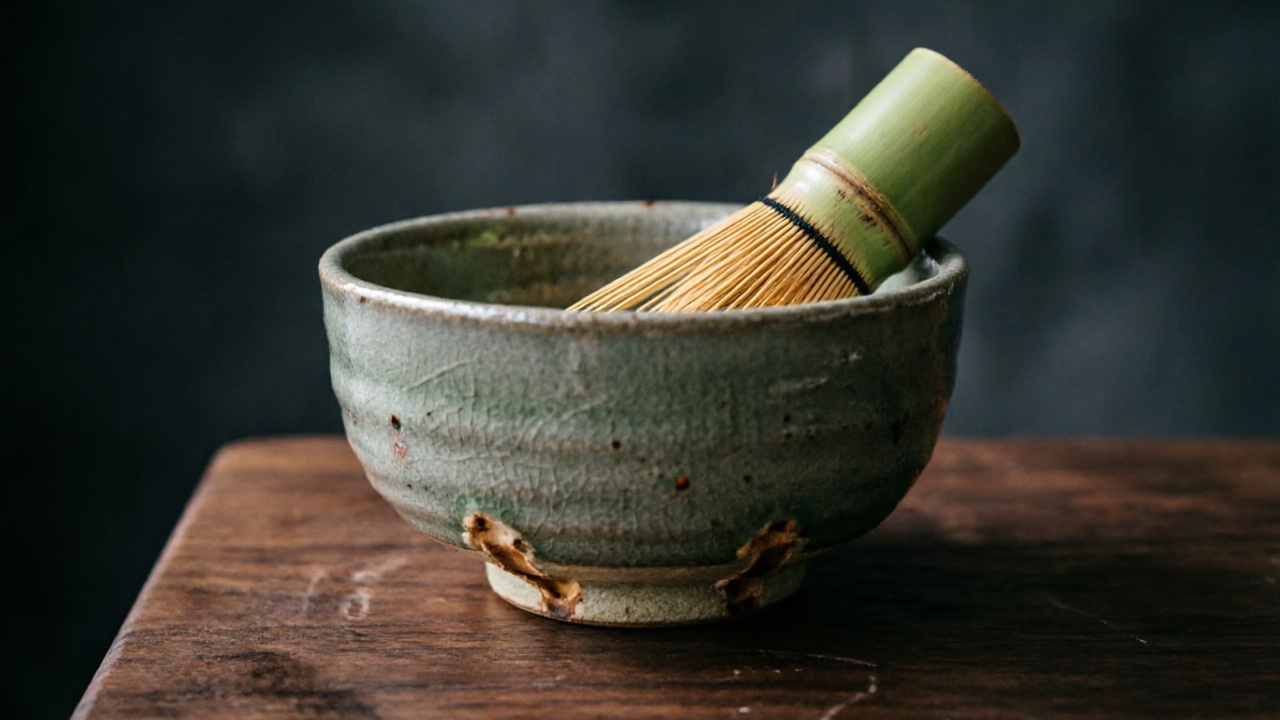
Most matcha tools look the same on a product page. The differences that change the cup are the ones the photos don’t show: bowl glaze roughness, bristle count on the chasen, mesh count on the sifter, the gap between the lid and the rim on the storage tin. This guide covers what each tool does to the cup, and the cheapest option at each tier that still works.
Why Matcha Tools Are Different
Steeped tea infuses; matcha is suspended. The powder must be evenly distributed in water around 80°C — hot enough to dissolve umami compounds but not so hot that it scorches the powder and creates bitterness.
A narrow mug works for steeped tea because the leaves stay in one place. A narrow mug fails for matcha because the whisk’s M-motion hits the wall before the powder is fully mixed. A fine-mesh strainer works for steeped leaves; for matcha powder, the holes need to be fine enough to break up clumps — a few passes through a standard tea strainer won’t do it. And airtight storage matters for matcha more than for any other tea because the powder is the entire leaf, ground fine, exposed to oxygen on six sides at once.
The Bowl (Chawan)
The bowl is the single biggest variable. The whisk is M-motion, the powder is roughly 2g, the water is around 60ml — but the bowl’s diameter determines whether the M-motion has room to work.
What Actually Matters
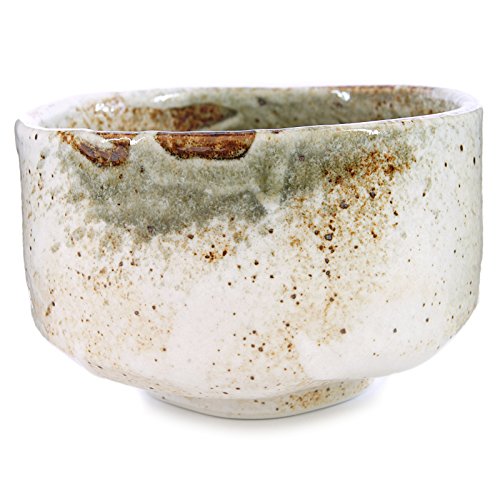
Internal diameter (12 cm or wider for a standard M-whisk), a flat or gently curved bottom (not a sphere), a stable base, and a pour spout if you intend to use the bowl for lattes. Material — porcelain, stoneware, ceramic — is secondary; the wall surface texture affects the foam grip slightly but not enough to override a comfortable diameter.
Budget Pick
The cheapest option that meets the diameter requirement is the Jade Leaf Matcha Porcelain Bowl, $14.99 on Amazon. It’s machine-glazed, has a pour spout for latte use (see our matcha latte recipe for the full process), and the 18 oz capacity is the right size for a standard M-motion.
Upgrade Pick
If you want a denser foam, upgrade to a hand-thrown chawan with a rougher glaze. The Mino Ware Japanese Handcrafted Chawan (Yuki Shino), $32.95 on Amazon is rough to the touch — that roughness is what the whisk’s bristles catch against during the M-motion. In practice, the rougher surface seems to give the bristles more grip, producing a denser micro-foam compared to a smooth-glazed bowl whisked the same way (smooth vs. rough glaze, same whisk motion). The trade-off is shape: hand-thrown bowls are rarely perfect circles, and the M-whisk’s path needs adjustment.
What Doesn’t Matter Much
Color, pattern, whether it’s labeled “Japanese” or “Chinese.” The bowl’s function is geometry, not aesthetic — though a pleasing color does make daily use more likely, which is its own form of function.
The Whisk (Chasen)
The chasen is a 70-to-100-prong bamboo whisk, carved from a single piece of bamboo with the tines split at the tip. The prongs spread as you whisk, breaking up powder and incorporating air simultaneously. A handheld frother does the powder-breakup part but not the air-incorporation part as cleanly.

What Actually Matters
Prong count — more is finer; 80+ is the standard for ceremonial grade. Shape — straight prongs work for most cups, but a curved-tip chasen is better for very small volumes. The chasen will wear out over time; the tines eventually lose tension and need replacing — how quickly depends on how frequently you whisk and how hard you press.
Budget Pick
The most cost-effective entry is the 2-pack Bamboo Matcha Whisk (Chasen), $12.49 on Amazon. Two for the price of a single, so you have a replacement ready when the first one’s prongs go soft. The foam quality also depends on the matcha itself — finer powders produce a creamier suspension. The matcha variety guide breaks down which grades work best for different preparation styles.
If You Don’t Want a Chasen
A handheld milk frother works. The foam is coarser, the air bubbles are larger, and the result is more like a shaken espresso than a whisked matcha. But for around $9 and no learning curve, it’s a reasonable alternative for daily use. The Zulay Kitchen Milk Frother, $8.99 on Amazon is a straightforward alternative if you are not ready to learn the whisk.
What Doesn’t Matter Much
The decorative cord wrap at the handle. It’s traditional, not functional. Bamboo age is sometimes cited as a factor, but in practice the difference between younger and older bamboo is small enough that it doesn’t change the foam noticeably — prong count and technique matter far more.
The Scoop (Chashaku)
A bamboo chashaku holds roughly one gram per scoop — two scoops is the standard dose (~2g) for a full bowl of usucha (thin matcha). Using a teaspoon introduces two problems: tsp volumes vary from 1g to 3g depending on grind and density, and a metal spoon can dent the tin’s seal.
What Actually Matters
Material — bamboo (traditional) or plastic. Bamboo is quieter, plastic is more durable. Both work. Shape — a scooped end (not flat) and a handle long enough to reach the bottom of a 15 oz tin. The hooked handle is a convenience, not a requirement.
Budget Pick
The Bamboo Matcha Scoop (Chashaku), 2-pack $5.69 on Amazon is a pair of roughly-1g scoops with a hooked handle — the hook lets you clip it to the side of the tin, so it’s never lost in a drawer. Two scoops means you can use one for the daily tin and one for ceremonial grade if you keep both.
If you have a kitchen scale that reads to 0.1g, the chashaku becomes optional. Most people don’t, and the chashaku is cheap enough to just own.
The Sifter
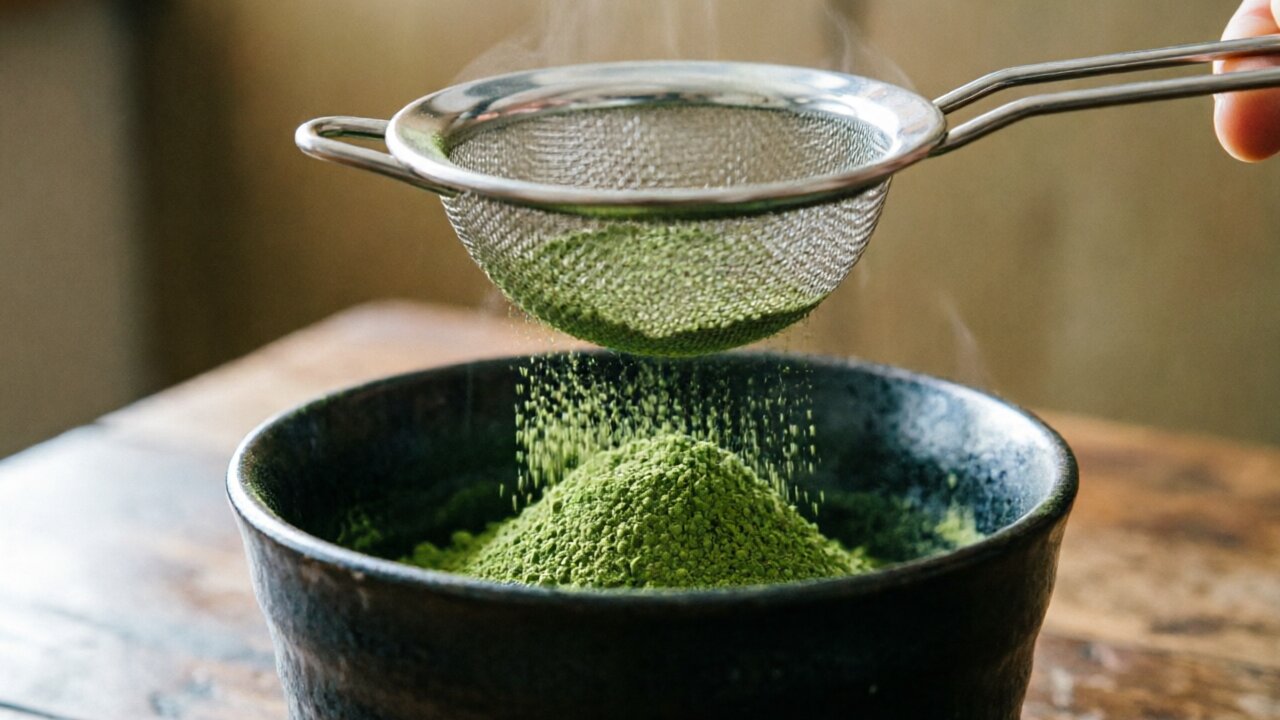
Clumps are the most common reason home matcha tastes bad. A clump left in the bowl doesn’t dissolve regardless of how vigorously you whisk; it sits at the bottom, then releases tannins at unpredictable times as the whisk eventually breaks it up. The result is bitter pockets in an otherwise smooth cup.
What to Look For
A fine-mesh stainless steel sifter, priced around $10 on Amazon, catches clumps small enough to break up before water touches the powder. Coarse strainers (the kind sold for steeped tea) let clumps through; flour sieves clog. The right mesh is somewhere between the two — tight enough to catch clumps but open enough to pass powder with a single tap.
The Jade Leaf Matcha Stainless Steel Sifter, $9.99 on Amazon is a good middle ground. Use it over the dry bowl, not the tin. A single tap-and-shake through the mesh is enough. If you’re pressing the powder through with a finger, you’re pressing too hard and the sifter isn’t doing its job.
Storage Tin
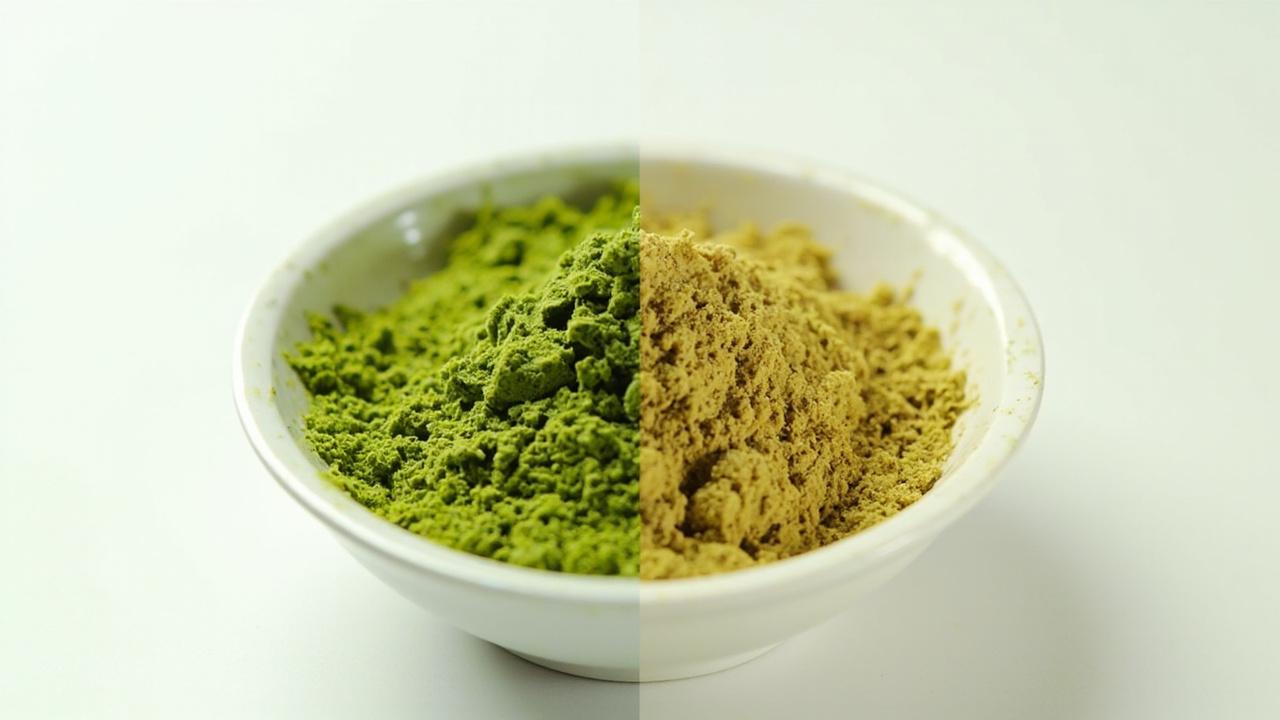
Matcha loses color and flavor within days of opening if exposed to oxygen, light, or moisture. The original tin from the seller is usually air-permeable at the seam and light-permeable at the lid; it holds well for the first week or two but isn’t reliable for longer storage.
What to Look For
A metal tin with a tight-fitting lid is the answer. Press-fit lids (without rubber gaskets, which absorb flavor over time) are preferable. Opaque construction blocks light. The tin should hold enough for regular use — 100g covers roughly two months of daily servings.
The YAFIYGI Matcha Tin Container, 15 oz, $9.99 on Amazon meets all three criteria.
Storage & Shelf Life
The fridge is the right place, not the freezer. Freezer-thawed matcha picks up condensation; the water droplets clump the powder on next use. Fridge-only, airtight only, away from strong-smelling foods (matcha absorbs odors).
Opened matcha peaks in the first 4-6 weeks when stored airtight in the fridge. After that the color gradually shifts from bright green to olive — the flavor follows. Three months is a reasonable upper limit; beyond that the umami flatlines. The matcha freshness section has more detail on how chlorophyll and L-theanine degrade over time.
What to Skip
Matcha starter kits often bundle a low-quality matcha with mid-quality tools, and the set is priced for the matcha more than the tools. Buying the tools separately, in the grade you want, almost always comes out cheaper and better.
Electric matcha dispensers that sift and dispense a fixed dose are an unnecessary gadget for a single cup. Useful in a cafe; redundant at home.
Stoneware bowls with internal glaze patterns look striking in photos but the patterns don’t help the foam. The plain-glazed version of the same bowl is the same tool at 20-30% less.
Matcha-specific kettles — kettles marketed specifically for matcha, with presets from 70-90°C — are usually a $30 markup on a generic gooseneck. A general-purpose temperature-controlled gooseneck does the same job for the same price.
The Complete Setup, by Budget
$30 starter (works, not pretty): Bamboo Scoop $5.69 + Bowl $14.99 + Sifter $9.99. Add a fork or jar if you don’t have a handheld frother. Total: $30.67.
$55 standard (recommended): Above, plus 2-pack Chasen $12.49 and Storage Tin $9.99. Total: $53.15. This is the everyday setup for daily drinkers.
$70 ceremony upgrade: Same as standard, but swap the Jade Leaf bowl for the Mino Ware Chawan $32.95. Total: $71.11. Keep both bowls and it’s $101 — one for daily use, one for ceremony. The Mino Ware’s rougher glaze gives a denser foam; whether that matters is up to your palate.
$99 Hario set (complete kit): Get the Hario Matcha Tea Set (Clear) – Double-Walled Glass Matcha Bowl with Chasen Whisk, $99 on Amazon. It bundles a smaller bowl, a chasen, a sifter, and a scoop. The bowl is the weak point (smaller than the Jade Leaf, and not as comfortable to whisk in), but the rest of the set is well-matched. Add a Jade Leaf bowl for $15 if the Hario’s diameter feels cramped.
How These Picks Were Chosen
The recommendations above follow bowl geometry and glaze texture, not marketing photos. The smooth vs. rough glaze foam difference is explained in the bowl section via bristle grip on the wall. Other categories follow product specs, Amazon reviews, and standard matcha-prep practice.
Where this fits in Mind of Tea
The vessel and tool choices here connect to the broader Teaware collection (which covers steeped-tea pots, gaiwans, and yixing clay for oolong) and to brewing (the temperature control piece is shared with the Brewing index recipes). For storage and freshness, the matcha storage section covers how chlorophyll and L-theanine degrade over time.
The Tea in This Article
The Mind of the Teaware Shelf
The chasen is a working tool that wears out and gets replaced. The chawan is a long-lived object that takes on the patina of the person who uses it. The tin determines whether the matcha in your bowl today is the same matcha you opened last month.
Buy the chasen and the tin first. Add the bowl when the M-motion starts to feel cramped. Add the sifter when the clumps start to bother you.