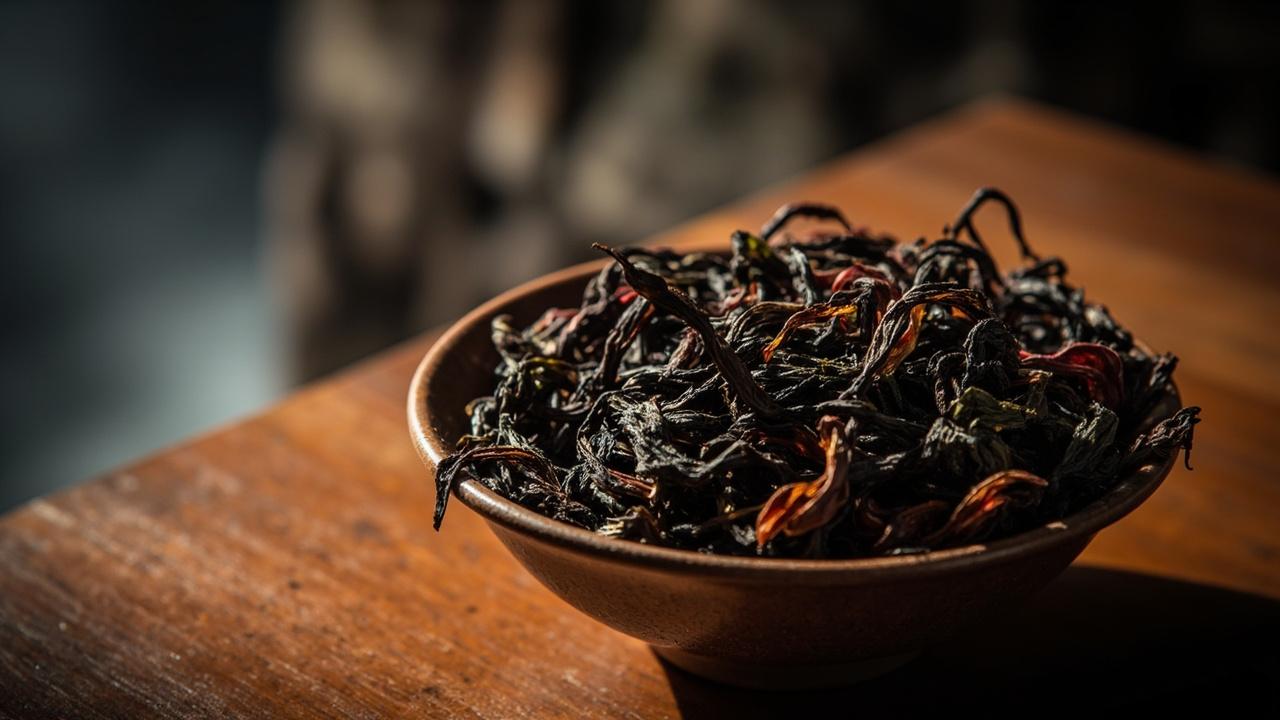
From the cliffside gardens of the Wuyi Mountains in Fujian, Da Hong Pao (大红袍, “Big Red Robe”) is China’s most storied rock oolong [2]. What separates it from every other dark oolong is yan yun (岩韵) — the mineral “rock rhyme” born from cliff-grown terroir and charcoal roasting.
- Oxidation 60–80% — darker than Anxi oolong; a dark cup, not green
- Leaf: long twisted strips — ropes, not rolled pellets
- Yan yun (岩韵) — mineral rock rhyme from Wuyi cliffs
- Gongfu: 8 g / 100 ml / 15 s first — rinse 5 s, then +5 s, 8–10 cups
- Retail = cultivated — mother trees are not for sale
- Caffeine ~30–50 mg / 8 oz — USDA oolong-typical [1]
If you already know Tieguanyin, Da Hong Pao is its darker, heavier cousin — the two are the bookends of Fujian oolong. I keep both on my shelf and reach for DHP when the afternoon calls for something warm and grounded rather than floral. For the universal steeping foundation, see how to brew tea.
What Is Da Hong Pao?
Da Hong Pao belongs to the Wuyi yancha (武夷岩茶, rock tea) family — oolongs grown on the mineral-rich cliffs of the Wuyi Mountains in northern Fujian [2]. The name 大红袍 means “Big Red Robe,” referencing a Ming dynasty legend; the story says an emperor draped red robes over the original tea trees after drinking the tea.
Several things set DHP apart from other oolongs you might know:
- Oxidation: 60–80% — heavier than Tieguanyin at 20–40%, giving a darker, deeper cup
- Leaf style: long twisted strips — not the tight pellets of Anxi oolong; the strips look dark brown to near-black
- Caffeine: moderate (~30–50 mg per 8 oz cup, similar to other oolongs) [1]. That range is USDA-typical for brewed oolong, not a Da Hong Pao lab assay — see caffeine by tea type and how we talk about wellness.
- Cultivars: Original Da Hong Pao is extremely rare. Most retail DHP comes from related Wuyi cultivars (Beidou, Qidan) blended to a recognized flavor profile [2]
Sister teas worth comparing: Longjing (Chinese green), Keemun (Chinese black), and Silver Needle (Chinese white) — each shows how terroir and processing shape Chinese tea. The tea varieties hub maps the rest.
Yan Yun — The Rock Rhyme
Yan yun (岩韵) translates literally as “rock rhyme” — and it is the key concept for understanding why Da Hong Pao tastes the way it does [2].
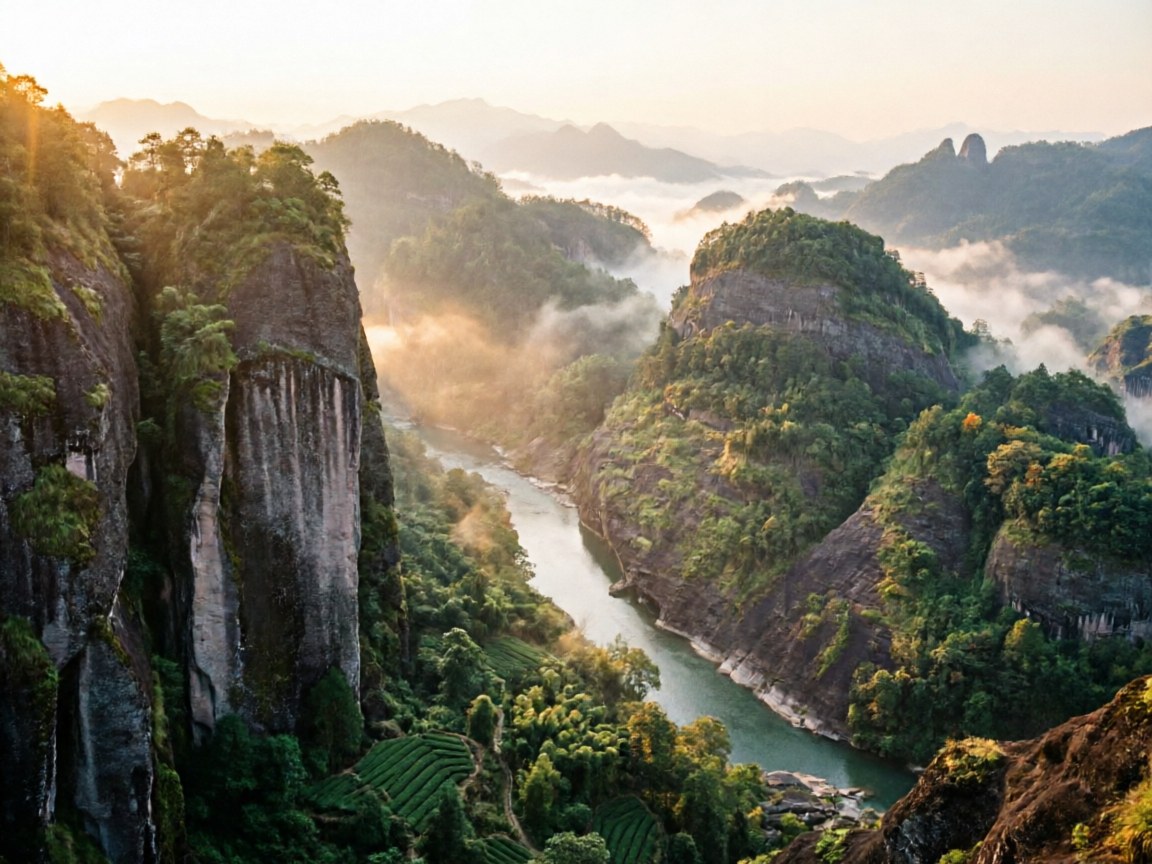
The Wuyi cliffs provide a terroir that no other tea region replicates: mineral-rich soil eroded from rock faces, limited direct sun from narrow valleys, and constant mountain mist. This combination creates a chemical signature in the leaf that translates into a distinctive mineral finish in the cup — the “rock” in rock tea.
Sensory cues for yan yun:
- Roasted cocoa and dark caramel — from charcoal roasting, the first taste layer. High-grade lots can show a brief orchid note [2]
- Dark stone fruit — plum, lychee skin, dried longan
- Mineral finish that lingers — not bitterness, but a dry, stony resonance that coats the palate
- Hui gan (回甘) — returning sweetness that arrives after the swallow, building across infusions
How Da Hong Pao Is Made
Wuyi rock tea processing has five stages, but roasting is where DHP earns its character [2]:
Plucking and withering
Spring and autumn harvests. Makers pluck two to three leaves per stem, then wither under sun and shade before oxidation.
Tossing (yao qing, 摇青)
Leaves are tossed to bruise edges. Oxidation at the margins builds stone-fruit and roast precursors.
Fixation and rolling
Heat stops enzyme activity. Unlike Tieguanyin’s pellets, DHP is rolled into long twisted strips.
Charcoal roasting — the defining step
Traditional Wuyi roasting uses charcoal in two to four rounds (hui huo, 回火):
| Roast level | Flavor profile |
|---|---|
| Light roast | Floral, lighter body, fruit-forward |
| Medium roast | Stone fruit balanced with caramelized sweetness |
| Heavy roast | Dark chocolate, smoky depth, longest mineral finish |
Roast depth is a maker’s choice, not a ranking. The goal is layered flavor without charring the leaf.
Look: Dry Leaf, Liquor, and Wet Leaf
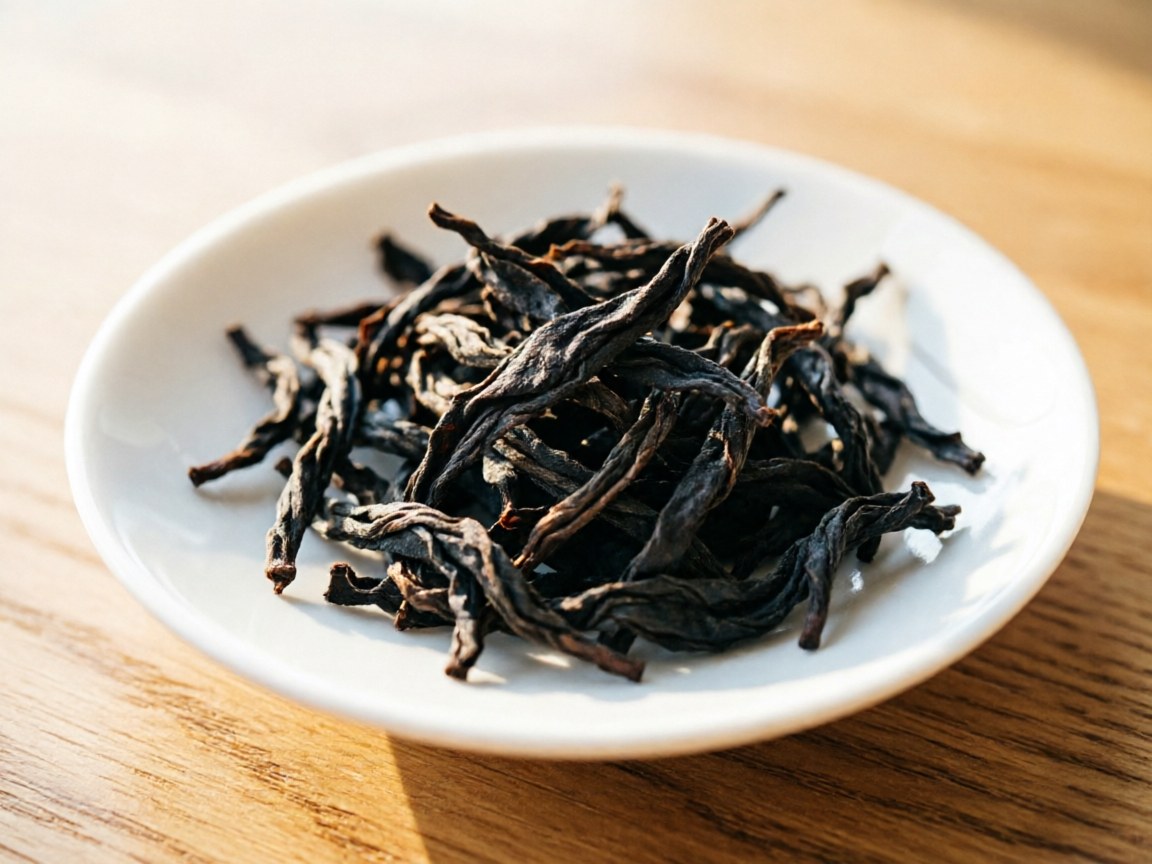
Use three visual checks before you trust a bag labeled Da Hong Pao. This is the Look module most writeups skip — dry leaf, liquor, wet leaf — so you can ID rock oolong without buying a fourth brewing tool.
Dry leaf. Expect long twisted strips — ropes, not Anxi-style pellets. Charcoal-roast lots run dark brown to near-black; some lighter fires stay green-brown [2]. Dust, fannings, or a greasy sheen are storage tells, not yan yun.
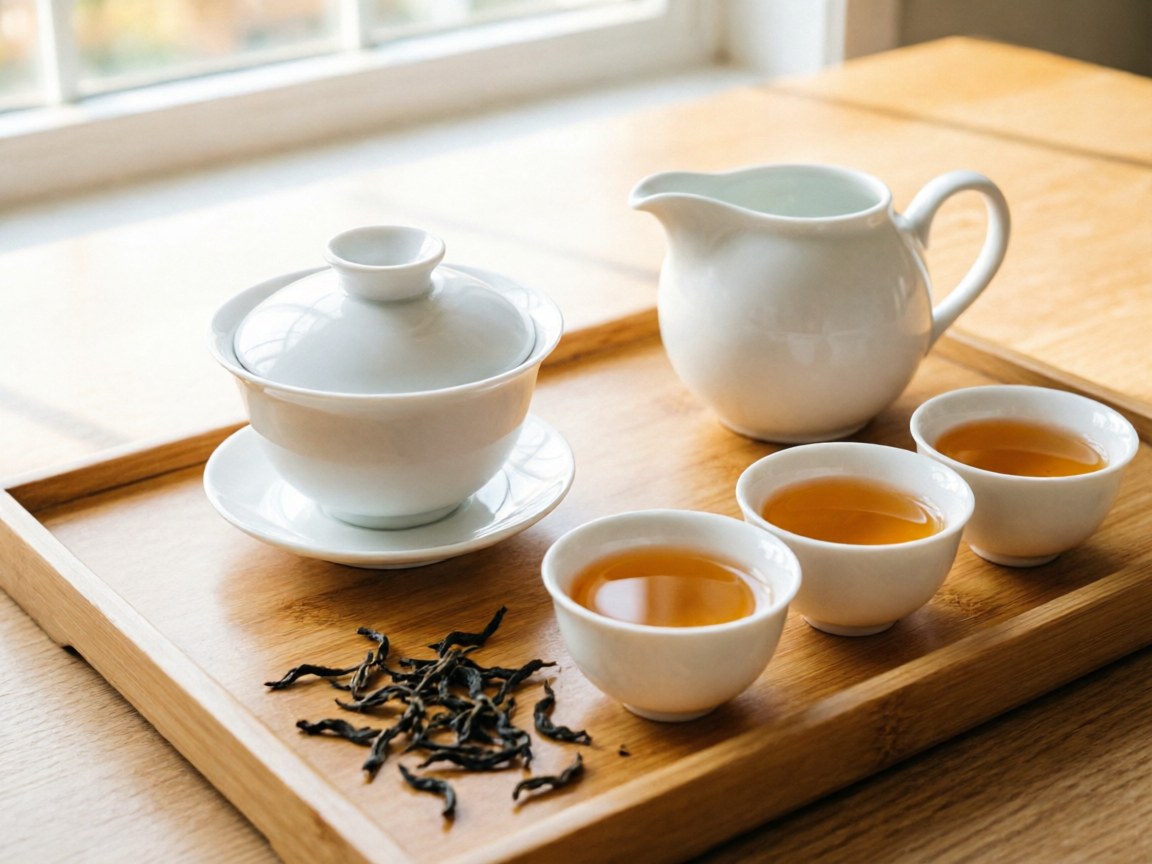
Liquor. After the rinse, the cup should be amber to deep amber, bright and clear — not the green-gold of a light oolong. Orange-yellow is normal on a lighter roast [2]. Cloudiness after the rinse is usually leaf dust.
Wet leaf. Strips unfurl into bronze-olive leaves with even color and no char spots. If the leaf stays tight and smells only of smoke, the fire went too far and later infusions will thin out.
No extra product table here. Look first, then use the grade and price sections to buy.
Mother Tree to Cultivated: The Grade Hierarchy
Three tiers explain the gap between “$1,000 per gram” auction headlines and the $15 bag on your shelf [2]:
| Tier | Chinese | What it is | Price range | Reality |
|---|---|---|---|---|
| Mother tree | 母树大红袍 | Six original trees on Wuyi cliff, protected since 2006 | Not for sale (~$1,000+/gram at last auction) | Museum tea — you will never buy this |
| Grafted / Qi Dan | 奇丹 | Vegetatively propagated from mother tree cuttings | $50–200+ per 100 g | Specialty source, high-end only |
| Cultivated | 商品大红袍 | Mainstream DHP blends from Wuyi-area cultivars | $10–40 per 100 g | What 99% of retail DHP actually is |
The 2006 date is the insurance plus the private-collection ban on the six mother trees [2]. The 2005 figure is the last high auction of 20 g, not the protection year.
The key takeaway: retail “Da Hong Pao” is almost always cultivated-grade blends. This is normal, honest, and how the market works. Wuyi tea makers blend multiple local cultivars (Beidou, Qidan, and others) to create the recognized DHP flavor profile. You aren’t being scammed when a $20 bag isn’t mother-tree tea — that’s simply the category. Commercial lots may also blend Rougui or Shuixian alongside Beidou and Qidan; those are house styles, not a fourth grade system.
If you want to explore the quality spectrum, compare a cultivated AAA grade like NASLAPH AAA Grade ($20.99) against a premium tier like NASLAPH Premium ($29.99). The jump in price reflects deeper roast complexity and lot selectivity.
How to Brew Da Hong Pao
Rock tea rewards the gongfu approach — many short steeps, full-boil water, dense leaf-to-water ratios. The twisted strips open slowly across infusions, and each round reveals a different layer of the yan yun evolution [1].
Gongfu method (primary)
| Param | Value |
|---|---|
| Vessel | 100–120 ml gaiwan or Yixing pot |
| Leaf | 8 g per 100 ml (rock oolong is dense) |
| Water | 95–100 °C (full boil — rock tea needs heat) |
| Rinse | 5 s awake pour, discarded |
| Infusion 1 | 15 s |
| Infusions 2–8 | +5 s each round |
| Total cups | 8–10 per session |
Keep 8 g per 100 ml and 15 s first. Writeups that quote 5–7 g and 10–15 s are a lighter load; density and roast, not a second brewing page.
The math: 8 g of leaf in a 100 ml gaiwan across 8 infusions produces roughly 800 ml total — equivalent to about 3 Western mugs, but spread across a flavor journey from roast-forward to fruit-sweet to mineral-dry. That’s why a how to choose a gaiwan guide matters — the right vessel transforms the session. For the full ceremony context, see gongfu tea.
Western method
| Param | Value |
|---|---|
| Leaf | 3 g per 250 ml |
| Water | 95 °C |
| Time | 3 min first steep; +1 min re-steep |
| Steeps | 2–3 |
Western brewing works for a quick mug, but it flattens the layered evolution that makes rock tea interesting. If you’re going to use a single long steep, a brewing ratio tool and steeping time guide will at least keep you in the right zone.
Leaf picks for brewing sessions:
- Tao of Tea Wuyi Oolong 2.5 oz Tin ($14.00) — gift-ready tin from an established US brand
- TODICAMP Authentic Wuyi Rock ($21.99) — premium roasted for gongfu sessions
- Teabloom USDA Organic Big Red Robe ($19.95) — certified organic, velvety profile
Price Tier Decoder — What Changes Per Dollar
Here’s what changes per dollar:
| Tier | Price | Pick | What changes |
|---|---|---|---|
| Budget bulk | $13 | FullChea 250g ($12.99) | Largest size per dollar — standard roast, everyday cupping. Won’t show full yan yun but solid practice leaf |
| Trial size | $15 | NASLAPH 1.76 oz ($14.99) | Smallest quantity for first tasting — test before committing to bulk |
| Mid-tier AAA | $21 | NASLAPH AAA 3.53 oz ($20.99) | Traditional craftsmanship, more balanced roast and better yan yun development |
| Premium | $30 | NASLAPH Premium ($29.99) | Higher roast complexity tier — more layered flavor profile |
| Super grade | $37 | XIXICHA Strong Fragrance 4.23 oz ($36.98) | Intense fragrance, 96-cup capacity — gift or impression tier |
Price in Da Hong Pao reflects craftsmanship: roasting skill, cultivar purity, and lot selectivity — not marketing markup. The jump from $13 to $25 buys noticeable depth in yan yun, more complexity per infusion, and better leaf uniformity. For context, Biluochun (a Chinese green) shows the same principle at a different price band — processing quality, not hype, drives the tier.
Recommended Da Hong Pao
If you’re starting from zero, pick one of these based on your commitment level:
- First cup → GOARTEA Premium Grade ($18.98) — Wuyi high mountain, approachable roast, 100 g is enough for 8–10 gongfu sessions
- Daily bulk → FullChea 250g ($12.99) — best cost-per-gram if you’ve decided rock tea is your daily cup
- Gongfu session → TODICAMP Authentic Wuyi Rock ($21.99) — premium roast depth for serious multi-infusion tasting
- Gift or impression → XIXICHA Strong Fragrance 4.23 oz ($36.98) — intense aroma, gift-ready packaging
If you also drink Matcha for focus, Da Hong Pao offers a slower, warmer caffeine curve — rock oolong is an afternoon and evening tea, not a morning jolt.
The Mind of Da Hong Pao
Da Hong Pao teaches patience roasted into the leaf. Three rounds of charcoal fire do not rush the flavor — they build it, layer by layer, until stone fruit gives way to mineral and the cup tastes like the cliff it grew on. That is yan yun: not a tasting note you memorize, but a resonance you recognize after the third infusion, when the roast softens and the rock underneath speaks. Brew it slowly, and the robe reveals itself.
References
[1] USDA FoodData Central. Beverages, tea, brewed. https://fdc.nal.usda.gov/ — caffeine values for brewed teas. Oolong typically 30–50 mg per 8 oz cup; brewing parameters (leaf weight, water temperature, steeping time) influence extraction.
[2] Wikipedia contributors. Da Hong Pao. https://en.wikipedia.org/wiki/Da_Hong_Pao — mother tree legend, Wuyi cliff origin, rock tea classification, charcoal roasting process, and grade hierarchy context.